292. The Fine Line Between Confidence and Delusion

Are you being confident or delusional? 

I ask you this question because I have actually been asked this question more than once. 

Lucy, do you think you’re a little too confident in yourself? 

And my answer is no. 

I believe we need to be delusionally confident in order to shatter all of our negative self-talks and actually make bold moves.

For me personally, it was being delusionally confident that got me to where I am today. But today I do want to talk about something we don’t really say out loud. There is actually a difference between confidence and delusion because there is a fine line.

But at the same time, I can’t just be delusional thinking I’m better than others, or I don’t need help, or I’m always right. Happy New Year, by the way. I’m recording this as it is the new year of the fire horse, thus the red.

And if you care about growing, leading, or building something meaningful, this is important because there is a difference. 

LISTEN TO THE PODCAST

WATCH THE EPISODE

Here’s what I see all the time. Some people have too much confidence.

They don’t listen. 

They don’t ask questions. 

They assume they’re right all the time, even before they start anything.

So yes, this kind of confidence can lead to bad decisions, broken relationships, and missed red flags. 

But you know what? 

Even more people are on the other side, the side where people are fully capable, super smart, and already are ready, but don’t trust themselves. 

They wait, they overthink, and they talk themselves out of opportunities.

But most people are stuck somewhere in the middle, trying to believe in ourselves without crossing into fantasy land. So when you look at people who are actually successful long term, they’re not the loudest in the room. They are confident, but more so they are curious.

They are driven by curiosity, but they also listen. They can change their mind when something isn’t working. Now compare that to people who think confidence means never being wrong.

They ignore feedback. 

They blame other people. 

They confuse confidence with being unshakable.

And that’s where things start to go down south. 

Real confidence isn’t about being certain all the time. It’s about being honest with yourself.

I’ve seen people with big energy and big dreams burn everything down slowly. 

They believed in themselves so deeply that they stopped listening. 

Warnings are brushed off.

Concerns are called negativity. 

And what stood out to me was that they didn’t fail because they lacked confidence. 

They failed because they refused to question it.

Here’s the difference that changed how I see this. 

Confidence says, I believe in myself. 

And delusion says, I don’t need feedback.

One helps you grow and the other keeps you stuck. 

Real confidence isn’t loud. 

Real confidence doesn’t need to prove anything.

Real confidence is very calm. 

Real confidence is grounded. 

Real confidence is trusting yourself and at the same time, staying open to learning.

That’s the balance we’re trying to find. The sweet spot. 

I’m curious, where have you seen confidence turn into delusion? Maybe in yourself or others.

Share your thoughts in the comments. 

And check out all my other episodes where we talk about building real confidence.

Learn more about Lucy's coaching:

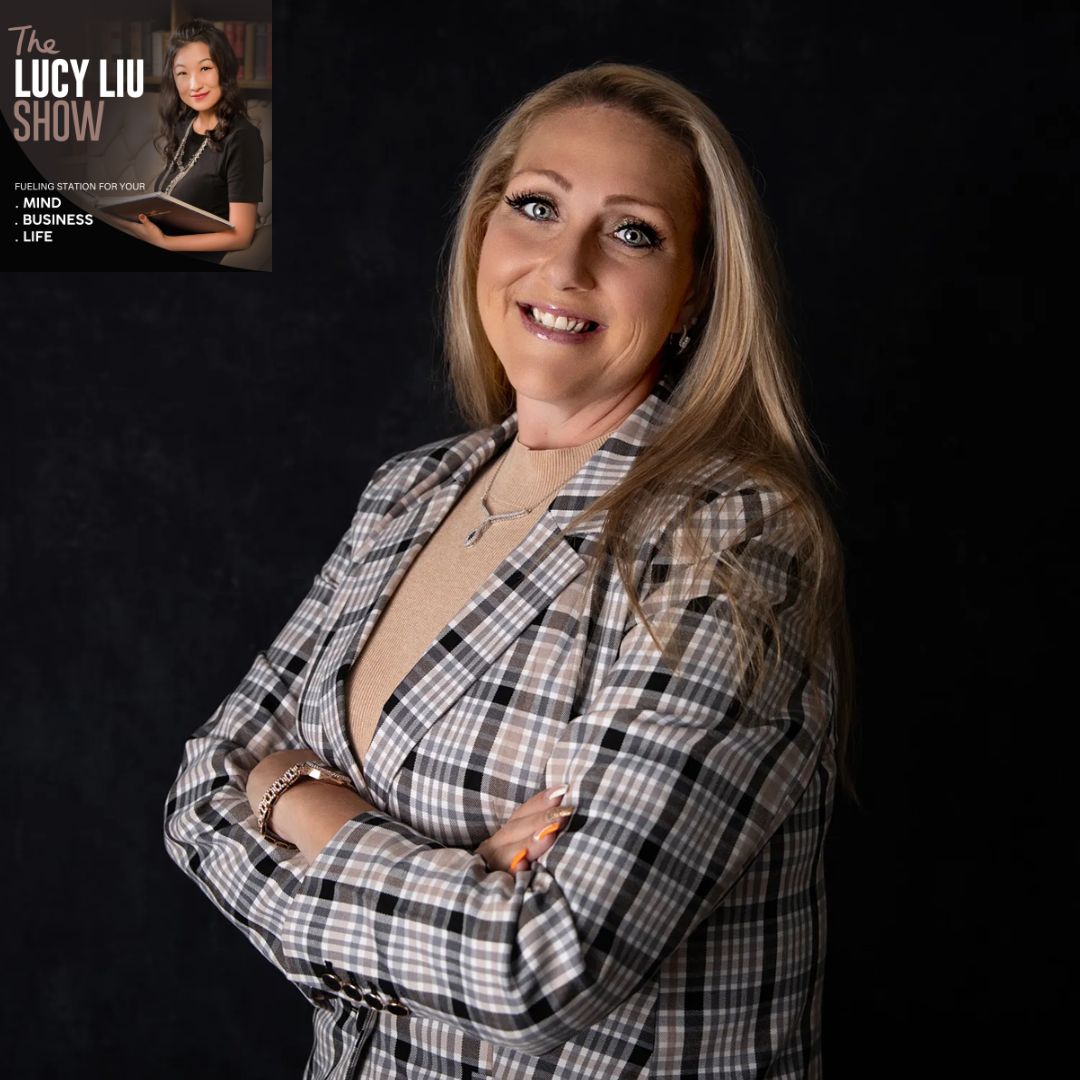
291. Make 6 Figure a Day with Million Dollar Mom Anisa Crespo

Anisa Crespo shares how leaving a six-figure career, choosing faith over fear, and doing deep inner work allowed her to build wealth, freedom, and legacy; make 6figure days while empowering moms to rise, expand their vision, and lead with integrity.

5 Key Takeaways

  • Confidence is a decision backed by daily action: growth comes from choosing who you’re becoming, not waiting to feel “ready.”

  • Fear keeps powerful women invisible, and faith must be chosen intentionally when doubt, success, or failure shows up.

  • True success is freedom, not a number, freedom to live life on your terms while staying aligned with values.

  • Not all money is good money: building wealth with integrity requires saying no to opportunities that drain your spirit.

  • You don’t need to start ahead to rise: stop comparing your chapter 2 to someone else’s chapter 12 and expand what you believe is possible.

Anisa Crespo is the influential Co-Founder of Million Dollar Mom Inc, a groundbreaking visibility company that elevates women into wealth, leadership, and legacy. With her signature mix of strategy, energetics, and powerful brand vision, she guides entrepreneurs in aligning their businesses with their highest frequency to create sustainable, exponential growth. A devoted twin mom and woman of faith, Anisa embodies what it means to rise in both motherhood and entrepreneurship, building a seven-figure empire in under a year alongside her business partner, Natosha Navarro.

Together, they have created a world-class ecosystem that includes The Million Dollar Room, a luxury mastermind retreat and docuseries filmed in Laguna Beach, a global platform amplifying women’s voices, their Million Dollar Network, bestselling book anthologies, and live experiences designed to position women for high-level visibility. Their mission centers on helping moms transform into millionaires by giving them the platforms, mentorship, and community needed to scale with clarity and confidence.

Anisa is widely recognized for helping women embody wealth and step boldly into their influence while building legacies that impact generations. Today, she is a sought-after mentor, speaker, and executive producer, creating transformative spaces where women are seen, celebrated, and elevated to the world’s largest stages.

LISTEN TO THE PODCAST

WATCH THE EPISODE

Make 6 Figure a Day with Million Dollar Mom Anisa Crespo

Connect with Anisa Crespo

https://www.milliondollarmom.org


FULL EPISODE TRANSCRIPT

Hello, hello, beautiful souls. I’m so excited to have you back with me because I have a very special guest, Anisa Crespo, with me today. She is the co-founder of the Million Dollar Mom Society and a passionate advocate for women’s visibility, empowerment, and legacy.

As an executive pursuer, podcast host, author, and speaker, she shares her journey to inspire women to rise on their power and build lives they love, and that’s what I’m all about as well. So I’m super excited for this conversation. Welcome to the show, Anisa.

Thank you, Lucy.

I’m excited to be here and share with your audience today. Thank you.

Awesome. So you left a six-figure career to start your businesses. What was the moment that you knew staying in your six-figure career would cost you more than leaving?

Yes, I was in a male-dominated industry for over 10 years and I woke up one day, had a spiritual awakening, and realized that I needed to help women. I didn’t know how I was going to do that or what I was going to do, but the how and what is none of my business. The who and why is.

And so I knew why and I knew who and one thing led to another, but really helping someone scale from seven to eight figures in a company over the course of 10 years and then realizing I can do this for myself.

Yay. We all know it’s very, very different between a regular corporate job and entrepreneurship, but who did you have to become internally before external success could expand?

Yeah, so I was on a journey of personal development for several years before any of this transpired. I overcome a lot of trauma in my life, decades and decades of it, and I got to a point after my mother passed away in 2017 and going through a lot of grief and loss over the course of a few years where I found personal development and really did the work. And so it requires action every single day.

It’s not like, oh, all of a sudden you’re fixed. You’re the next version of yourself. Every single day, I work at the person that I’m becoming tomorrow.

So the woman that I’m going to become at the next level is who I’m focused on every single day and it does, it requires a lot of work, but it is worth it.

What identity shift was the hardest in between those times for you?

Yeah, so my whole life, I mean, growing up in a family with a single mom, we were always struggling financially. Everything was always complaining and negativity and, you know, we were loved, but that was just the type of world we lived in. And so I thought that was my identity.

I thought that was normal, you know, cousins and aunts and uncles getting together and talking about everybody else. Like I just thought that was a normal thing. And then after finding personal development, I realized that this is not normal behavior and I don’t have to choose it.

And so I choose to be happy every day. And so the identity of being broken and coming from a broken home and, you know, being the victim mentality and even an employee mentality, that shifted for me a lot and stepping into the role of CEO and leadership. Those were the biggest challenges, but again, totally worth it.

Yeah, and now you advocate for women’s visibility, but what do you think so many powerful women are kept from being on scene, even when they’re successful? What’s keeping them on scene?

Fear. It’s the fear of what other people are going to think about them. It’s the fear of failure.

It’s the fear of success, getting successful and then being able to hold that success and repeat it over and over again and scale it. That’s the biggest thing that women struggle with is just that fear. And what I always tell women is there’s no place for fear and faith.

So you have to choose one. So you’re either going to live in fear over faith. You’re going to worry about everything and everyone else or you’re going to have faith, faith in yourself, faith in the plan, faith in God, the universe, mother nature, spirit, whoever that is to you.

And that no matter what happens, everything will work out.

I think it’s that strong belief, right? Really true belief. Like we say, I have faith.

I believe in whoever the higher power you believe in, but then a little curveball is thrown at you. Are you still owning your power, right? So what does owning your power look like for you when you’re juggling faith, family, business, when that curveball is thrown at you?

It’s just remembering why, why I started in the first place. What is my purpose here on Earth? It is standing in my power means to me being in alignment.

So I am a person who if anything is out of alignment for me, I feel very blurry like very just almost like, you know, how you have an ear infection and you have like your equilibrium is off. That’s how it is. If anything is out of alignment for me.

So whether that’s clients who really don’t fit or forcing something that is seems like a good idea, but it’s really not that to me is really being able to step away from things and say no to things that is standing in my power.

I love it. I hope everyone listening will continue to stand in their own power, but I believe there probably was a point in your life when you realized you were playing it safe. How did you personally move from playing it safe to playing it bigger?

It all comes down to making a decision when you make a decision and then you take massive action to back that decision up every single day. You’re well on your way. So when I was working my job, I was making six figures.

I ticked all the boxes that a successful corporate woman could want in America, you know, I had a good boss, good colleagues, work from home, flexibility, seniority, like all the things and something was missing. I just my cup was no longer being filled like that job served me for 10 years, but then my cup was no longer filled. And so I made a decision that I was worth six figures a day.

And when I decided that I was going to leave my job to start a business, I told people friends family my plans. They called me a lot of things smart was not one of them, but now I make six figures a day. So I love it.

I love it because I say this all the time as well. Everything you want is only a decision away because having the confidence is a decision how you want to live your life. That’s your decision who you spend time with.

That’s your decision. Everything comes down to that one decision that can change the course of your life.

Yeah, 100% I couldn’t agree more it everything we consume whether it’s the food that we put into our body whether it’s the media or the social media that we read or listen to or you know, every single thing you choose what is going to be the outcome and the results are all about the decisions from today. So the results of tomorrow is about what you decide to do today. It’s just like a weight loss journey, which you know, I have been on my entire life and it’s getting up and going to the gym on the hard days, you know the days where you don’t feel like you want to go but the results and the payoff are always worth it in the end.

Yes, and so many people think we have to learn more on this journey and I believe that along the way even more important for us to unlearn things. Was there a belief about confidence or playing it bigger? You had to unlearn on this journey in order to get there.

Oh, absolutely. I mean my mom always taught me to go to school get a job climb the corporate ladder and then live happily ever after so I went to school. I got a job.

I climbed the corporate ladder and then the happily ever after was missing. So I had to unlearn that piece of it and say, you know what there’s more to life than just this and for me, I will never teach my children to go to college. I will teach them how to invest invest in real estate invest in business.

I will teach them how to invest in themselves how to start a business how to sustain a business how to sell and once they have all of those skills, they can do anything that they want in life even go to college.

I love that and the same with me for my daughter. I’m telling her yes, you’re going to school, but it’s not about what you’re it’s not about the what happened in history that matters. It’s about learning your habits.

It’s about your discipline. It’s about how you live life that I want you to get out of school. Yes, absolutely.

How do you define success now versus before freedom?

It’s what makes you happy a lot of people think that success is a number in a bank account or a number of clients or you know, any kind of number where it’s defining monetary stats and I just don’t believe in that because everybody has their own definition of what success is when it comes to revenue and income, right? Like there’s some people who it could be completely life-changing to them to make $10,000 a month and then there’s other people who would cringe at the idea of making $10,000 a month. So it’s all about what makes you happy right for me success is being able to have the freedom to do whatever I want as far as if I want to take my kids to the park in the afternoon, I can I don’t have to answer to somebody I have to answer to myself.

If one of my children is sick, I don’t have to check in to see if there’s space on the calendar for me to take them to a doctor’s appointment. If I want to take a vacation, I’m not checking a calendar to see if there’s anybody else that’s off during those days. I just happen to know that I created a life where I have freedom that I can do the things that make me happy and still live an abundant life beautifully said we’re doing it for our children.

What kind of legacy are you always really consciously modeling for your children through your work showing them that they can do whatever they want to do as long as they believe in themselves number one and then number two again take massive action to back up those beliefs. So a lot of times, you know, people throw around manifestation. They’re like, you know, I’m manifesting this and that and it’s like, okay, you can’t manifest your dream life sitting at home watching Netflix on the couch.

Now that’s not saying that you know, you can’t have an amazing life and binge watch a series now and then what I’m saying is if you’re not putting in the work every single day and being consistent consistency is the key then you are not going to weather the storm of what it takes to be successful.

Yeah. So what else do you want to say to the moms who feel guilty for wanting more?

Oh my gosh, there’s so much of this. It’s you know, when we’re when we’re in our role of motherhood, we’re feeling guilty that they’re not, you know, we’re not working our business when we’re in our business working our business. We’re feeling guilty that we’re not spending time with our kids and really that kind of never goes away.

I mean, we’re always going to have that but what I will say is that, you know balance as far as what is important to you, right? Like I don’t mind sometimes if my kids come in my office and I’m on a call like it is what it is. This is my life.

You might see a toddler running back and forth and that just is what it is. Whereas some people might draw the line at that and say no absolutely not if I’m on vacation, I have no problem checking in with emails or you know clients or anything like that because I’ve built a life where Monday through Friday. I also can take time off to go do whatever I want to do.

So it’s not like oh my gosh, I’m living just for the weekend or I’m working just for the weekend so that I can live then or I’m working just for a vacation so that I can live then. No, I live intentionally every single day. And so what I would say is if you’re feeling like you’re wanting more, there’s nothing wrong with that.

It’s there, you know, a lot of people think you’re being greedy or you know, you’re you should be focused on your family first. My family comes first. God comes first.

My family comes second. My business comes third. That’s the way I run my life.

And there is nothing wrong with wanting more. Everything that you desire, you deserve and you are capable of.

Yes, so much is in that. What is building wealth with integrity? And you mentioned faith a lot and I’m a big believer in that as well.

Has there been challenging times before for you to balance that ambition with a lineman and faith?

Absolutely. Not all money is good money. I’m going to tell you that right now.

There is money out there that is not clean. And when it comes your way, it’s very enticing. But really standing again in your power and being able to say no to opportunities that seem financially abundant, but will drain the life out of you.

That is really where that piece comes in where you can say, okay, I really felt like I honored my integrity in this moment. Beautifully said.

What’s a story of one of the biggest transformation you’ve witnessed with the women you’ve coached?

So we had a client come to us over the summertime and she was doing about $10,000 to $20,000 a month. And she said, I want to double this. And we said, why?

We said, why not 10X it? And so her mind had not been expanded to that ever. And she was just like, you know, a lot of people think that scaling and growth is linear and you’re supposed to go up and up and up this way.

And it doesn’t have to be that way. You can be here and go here and it’s a lot easier to 10X than 2X. And within a few weeks, she had done her first six-figure month.

So is that a common trait you see in moms who are thriving is really expanding that mindset of way more than you initially expected?

Oh, yeah. A hundred percent. A lot of times, unless you have seen someone else doing it, you don’t even know that it exists.

So when I first started my journey into entrepreneurship, I just started immersing myself into spaces where women were doing unthinkable things. I’m talking about like million-dollar cash days and it seems almost impossible. But when you see women doing it, and then you start to get to know these women and talk to them and realize that they’re just regular women just like you, it starts to seem possible for you too.

And then you can start to make a way for it. And then the universe can start to make a way for it for you because now you believe it and you can see it in your head.

Yes. But for women who’s thinking, well, because they’re starting at a different place than me, I’m starting from zero. So for that person who’s just starting, is this still possible for them?

I started from zero.

Most people start from zero unless you’re, you know, born into wealth and you’ve been handed, you know, you were born with a silver spoon in your mouth. Most women are starting from zero and what I will say is don’t count other people’s money. Okay, and don’t compare your chapter 2 to somebody else’s chapter 12.

It’s everybody has their own journey and everybody is on a different path and some people go faster than others. Some people have different circumstances than others. Don’t compare yourself to other women.

Just take a look at the women that you aspire to be like and say I can do it too. And I’m going to do it on my timeline.

Yes, but you know what? Doubt shows up for all of us. How do you personally move forward without waiting for certainty?

That never goes away.

So doubt will show up at every level of your business, whether you’re just starting out or whether you’re scaling from 7 to 8 figures. It doesn’t, it doesn’t go away and every time you level up, you’re going to experience a new level of doubt and this imposter syndrome and you know, it’s the way to manage it is to understand that you need to re-regulate your nervous system for that level of success. So doing again that personal development work and really leaning into embodying the next version of yourself is really helpful when it comes to that and remembering your why because a lot of times when we’re doubting ourselves, it’s because fear, fear is the number one thing that holds us back.

We’re afraid of failure. We’re afraid of what other people think about us, what they’re going to say about us. We’re afraid of succeeding and not being able to hold that success.

And so whenever you get that, just ground yourself, take a step back and remember why you started in the first place because if there’s no mission behind it, then might as well just go work a job. Oh, yes.

Was there a mistake along your journey that taught you something really valuable?

No, there wasn’t a mistake. There were multiple mistakes. Yes.

Endless mistakes. Yes, of course. Yes, there were so many.

If I had to pinpoint one, I probably couldn’t. I mean, we, mistakes are learning lessons, right? Like they’re, they’re the opportunity to reflect and say, okay, here’s what works, here’s what didn’t work.

And more importantly, moving forward, now I can go into it even clearer and move, move through it without having to worry about, oh, is this going to work? Is this not going to work? I already know what does and doesn’t work.

And so now I can move through and try again or try something else and have that clarity and have that experience and not have to worry about it.

Okay, and if you’re listening, you know, we all make mistakes and it’s okay. Give yourself grace, but learn from it and know that there’s a new devil at every level. So we’re all in this together, but we are rising together.

What last reminder do you want every woman listening to Carrie after this conversation?

Whether you think you can or you think you can’t, you are correct. Your belief, particularly your belief in yourself, will dictate your destination. Beautifully said.

Great reminder. Awesome. Okay, so how can we connect with you?

The best way to connect with me is on Facebook, Anisa Crespo. Shoot me a DM, send me a friend request. I’d love to connect.

Thank you for being with us today. 

Thank you, Lucy.

Learn more about Lucy's coaching:

290. The Fear Beneath Ambition: What Top Performers Won’t Admit

Have you ever noticed how much pressure there is to be the best?

To be number one.
The most successful.
The most visible.
The one who’s winning.

Sure! maybe on the outside, it looks like ambition.
Looks like you have a drive.
You have high standards.

But today, I want to talk about what often lives beneath the need to be number one.

Because underneath that desire, what I often see in women is actually fear. And it’s important to address these fears because it will keep you from reaching your potential!

LISTEN TO THE PODCAST

WATCH THE EPISODE

For so many high-achieving women, the fear isn’t failure.

It’s being overlooked.

It’s the quiet fear of:

  • Being forgotten

  • Being replaced

  • Being invisible

  • Doing meaningful and hard work… and having no one notice

So striving to be the best becomes a form of protection.

“If I’m the top performer, they can’t ignore me.”
“If I’m exceptional, I’ll be safe.”
“If I’m number one, I’ll finally matter.”

This is not about ego.
It’s about scarcity.

Scarcity tells us:
“There’s only room for one.”
“There’s not enough attention.”
“If someone else wins, I lose.”

Scarcity creates comparison.
Comparison creates urgency.
Urgency leads to exhaustion.

And suddenly, your work is no longer rooted in meaning,  it’s rooted in fear of losing.

Fear of falling behind.
Fear of not being chosen.
Fear of disappearing.

Fear of not being good enough. 

Fear of what others will think of you.

But here’s the truth that changed everything for me:

You don’t need to be the best to be valuable.
You need to be aligned.

Let’s talk about visibility.

Many women feel torn between wanting to be seen  and not wanting to perform for approval.

So we overcompensate.

We push ourselves harder.
We speak louder.
We chase metrics instead of meaning.

But visibility that requires you to give up yourself
will never feel satisfying in the long run.

Real confidence isn’t about being the loudest voice in the room.

It’s about trusting that your voice matters, even in stillnes, even if you are not #1

When you stop trying to outshine others,
you create space to stand firmly in your own work.

Doing Meaningful Work Without Needing Validation

What if your work didn’t need applause to be worthy?

What if impact mattered more than recognition?

When you stop needing validation:

  • You make braver choices

  • You take fewer shortcuts

  • You create from integrity, not urgency

You stop asking:
“Will this be impressive?”

And you start asking:
“Is this true?”
“Is this aligned?”
“Does this serve?”

And something powerful happens…

Your work becomes deeper.
Your energy becomes steadier.
Your confidence becomes unshakeable.

What You Gain When You Stop Trying to Be the Best

When you stop trying to be number one, you gain:

Peace.
No more constant comparison.

Clarity.
You know why you’re doing what you’re doing.

Longevity.
You stop burning yourself out to prove something.

Trust.
In your timing. In your path. In your voice.

You stop competing for attention
and start attracting the people who are meant for you.

Because the goal was never to be the best.

The goal was to be fully yourself, without fear.

A Gentle Reframe

Instead of asking:
“How do I become number one?”

Try asking:
“How do I do my work with honesty?”
“How do I show up without shrinking or forcing?”
“How do I lead with calm confidence instead of fear?”

Because when you release the need to be the best,
you create something far more powerful:

Sustainable confidence.
Meaningful impact.
And a sense of enoughness—right where you are.

If this episode resonated, I invite you to reflect:
Where in your life are you striving out of fear…
instead of grounded belief?

And what might open up
if you stopped trying to be the best
and simply allowed yourself to be true?

Thank you for being here.
I’ll talk to you in the next episode.

Learn more about Lucy's coaching:

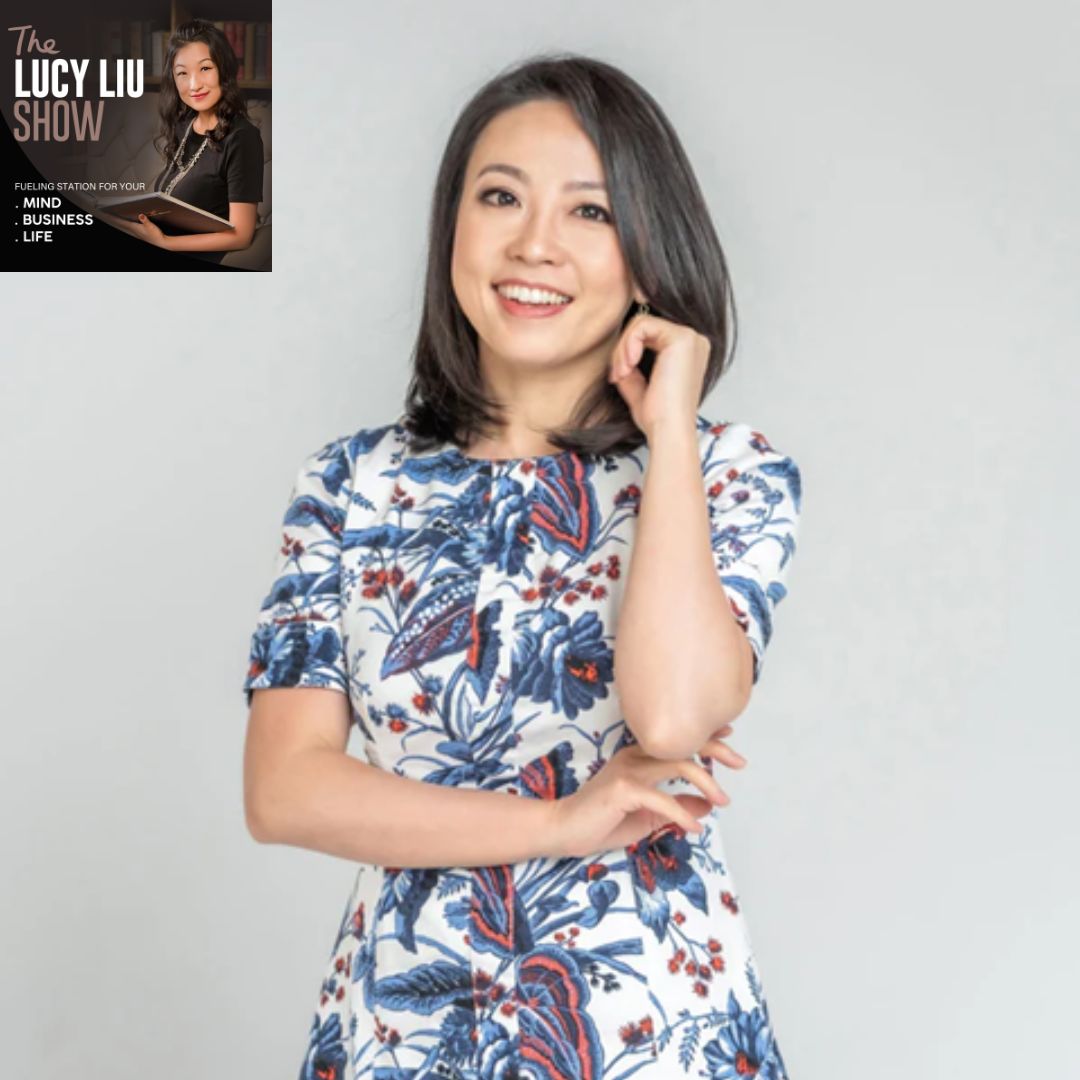
289. From Big Tech to Startup CEO: The Self-Trust Shift Every Woman Needs with Anya Cheng

This episode explores how true confidence is built through self-trust, mindset shifts, and leading with belief, especially when titles, validation, and certainty fall away.

Guest Anya Cheng is the founder and CEO of Taeler, an AI platform that uses AI to help men choose outfits, and rent them. Having led teams at big brands such as Target, Facebook, eBay, McDonald’s, she’s a Mentor at ‘500 Startups’, Lecturer at Northwestern University, author and a TED speaker.

LISTEN TO THE PODCAST

WATCH THE EPISODE

289. From Big Tech to Startup CEO: The Self-Trust Shift Every Woman Needs with Anya Cheng

Connect with Anya Cheng

https://taelor.style


FULL EPISODE TRANSCRIPT

Hello, hello, beautiful souls. Welcome back to another episode on the Lucy Liu show. And I have a special guest with me today.

Anya Chan. She’s the founder and CEO of Taelor and AI platform that uses AI to help men choose outfits and rent them. Having led teams at big brands such as Target, Facebook, eBay, McDonald’s.

She’s a mentor at 500 startups lecture at Northwestern University author TEDx speaker. How amazing is that? Welcome to the show Anya.

Hello, hello, this is Anya. I’m here in San Francisco. I now run a company called Taelor AI.

So you’ve led all these teams at big brands, as you started your own company and got backed by VCs behind 20 plus unicorns. How has your definition of confidence evolved as you moved from a corporate leadership to a founder and CEO role?

I would say the confidence is up and down, right? So because when I work working for big tech companies, people tend to like to talk to you. When I have the Facebook business card, people say, Yeah, I want to do business with meta or with Instagram, where I want to, I want to apply for a job there seems that people always want to talk to you.

And throughout I’m an immigrant from Taiwan originally. So throughout the last 15 years, kind of starting from working for like no one heard of type of a magazine company all the way to meta and leading team. But then being a startup founders, the confidence was just gone.

Because when I became a startup founder, I’m a CEO of Taylor, which no one heard of before. So then when I go to meetings, or Chamber of Commerce networking events, people tend to talk to those big IPO founders and definitely not small startup owner. So I remember one time when I went on a startup competition, and I prepare ahead.

So I found four more two judges beforehand, I practiced mock interview pitch with them. So when I went on the competitions, my pitch was perfect. But right after the pitch, the judge asked me questions, la la la la la, and I was stunned.

I couldn’t answer any questions wasn’t because I didn’t know the answer. I did. I totally knew all of the answers.

But in my head, I didn’t believe that I could answer those questions. I was trying to find an answer. Yeah, this question practice judge number 37 asked me, and I answered it in appendix number two, I wrote down his answer, which was blah, blah, blah, let me think about what was the answer.

Of course, I lost the competition, which was $100,000 award. And because I didn’t believe in myself, I’m just a startup founder. What do I know?

That’s not true. I worked 15 years before and I think about this topic all day long, way more than anyone else for years. So after that, we lost the competition.

And it was a hot moment that I realized people don’t follow people with scripts, people follow leaders with opinion and trust themselves. So I switch your mindset and think again. And in the future, every time when I go on competitions, I try to make sure I’m present and really sincerely tell them my point of view, because I trust that people like to hear my point of view.

And that’s how we end up one another 11 award, including last year’s e-magazine Best Startup of the Year and the year before Business Journal Most Innovative Startup in Silicon Valley. So it’s all about mindset change and about the confidence.

I love how you mentioned self-trust, because having that self-trust in rooms where you may be underestimated at first, right? So what helped you gain more self-trust in those rooms?

Yeah, I think some techniques that someone told me before was that we tend to sometimes talk about that I should do ABC. So well, today I should exercise more, I should lose weight, I should start my new year resolutions, I should launch these new business departments and these new initiatives. We have a lot that we should.

And the more we say we should, the more negative that we feel about ourselves. Because yeah, you should, why are you not doing that? But it should be different because you can say, I would like to.

I would like to start this new year resolution. I would like to start learning this sport. I would like to start spending more time with my family.

I would like to. It’s become more positive. It’s more action-driven.

It’s that you are motivated to do so, not you are blind that you are not doing so. So I think this little tip really helped me to feel great. And I also think that the list of doing things wasn’t very helpful before.

When I have a long to-do list before, I would write down what I want to do and write down what I want to do. And the list becomes 1 and 3 and 10 and 11 and 100 and 200. And then you never look at the list.

Every time you open a list, you feel like the list was laughing at you. Like, why are you not finishing me? So you feel bad about yourself every day.

But what I do nowadays was in the morning, I just write down one or two things that I have to do for sure today. But everything else, just follow the flow. Time is limited.

You can never finish everything that you want to do. You are doing great as long as you are prioritizing your time for the stuff that matters to you. And everyone’s definition of matters is different.

Yes. And I love how you mentioned, even though after losing the competition, you didn’t give up. You signed up again and again for more competitions and eventually won all those awards.

But you know, you still win and sold after getting those awards. So what was the scariest decision that helped you get there?

I think the scariest decisions would be being a startup founder, right? But I would say, I won’t say scary decision, but I would say the mindset change is very important. For example, when I started being a founder, I feel like the world is not fair.

People only want to talk to IPO founder. People are, when they see your business card is CEO of Taelor. What is Taelor?

Oh, how do you spell it? T-A-E-L-O-R. What does it do?

Oh, we do it for AI stylists. We do menswear rental subscriptions. And I feel like nobody cares.

But at that time, at first time, I feel like that’s bad. Why the world, everybody goes to talk to this big boss in those lunch meetings. Why people only talk, mostly when being invited to events, people ask you, how much revenue your company has?

So at the beginning, I feel sad about that. I feel like life is not fair. Only people who have a lot of money and very successful in the fields will be recognized and respected.

But then I quickly changed my mindset. I realized that it’s blessing. Because when I was working for big tech companies, Meta or eBay as a head of product, people talk to you.

And you don’t know if it’s because they truly respect you, they like you as a person, respect your opinion, they think you are a person with good integrity, or simply they just want to do business with your company. You don’t know. But now being a startup founder, you start to realize, hey, people do value your opinion.

And that’s why they partner with you. Our customers like that our stylists pick stuff for them, help them to look great, so then they get a job, get a date, close a deal. You are delivering value.

That’s why they engage with you. So it becomes a lot more clear who are nice person, want to help you, who really value your contributions, who really like you as a person, as a friend, versus who just want to use your big title to do something. So my mindset changed from just feel bad for the world, and feel sad about that, feel like I’m nobody again, why do I make decision to be a founder, I should be working for big tech company, to something that I realized that is actually a blessing.

Before when I got my Amazon package, they’re supposed to, they’re supposed to show up today. Why is half day late? But now being a startup founder, I knew the Amazon package showed up because 20 people work behind.

Our merchants talking to hundreds of vendors, find a great product. A buyer decide on a pricing after lots of a spreadsheet. Our engineers build out the software to track the systems.

Someone packing in a warehouse for you, putting on the tab. The post office pick up from the packaging from the warehouse. And then there’s shipping, someone driver driving in a rent, and trying to go home for their dinner.

And eventually they deliver to you, and here with another tracking back to the system. Lots of things behind, lots of hard work behind. I start becoming more appreciative for the world, and seeing more for the world.

And I think that’s the mindset change from sad to be feel that life is unfair, to feel appreciating those learnings, those opportunities, those be able to see quality people who truly want to help you and value the friendship. And I think there’s a mindset change that made me have an energy and motivation to continue on the journey.

Beautifully said. I love how you explained your mindset shift, because we as founders need that mindset shift at every level of our business.

Yeah, I think so. It’s not, no matter at what level, I think it’s never easy. I remember after being a startup founder, one time I talked to a reporter.

And as people know, a reporter is still pretty high up, even though the world has changed into being influencer or whatsoever. But still, it was a major media company reporter. So the reporter, we met in an event, she sent me questions for some interview, the questions were pretty long.

So I was trying to write down the answers for her. And I forgot. So it took me about a week that didn’t get back to her.

So she went back and talked to one of our investors and say, hey, she feel like I probably just feel like she’s not an investor. So I don’t care. So don’t even care to get back to her, which wasn’t the intention at all.

So I think that imposter syndrome happen in every level. Like even I were 15 years in career, leading teams and working for big tech companies, even the reporter, spending 15 years live and becoming a major key person for a major media company, it still happens. It happened a lot.

It happened to women. And it happened at any stage of the career or life where it happened to people becoming a mom becoming a new, different roles in a life changing environments. So I would say that the tip is, it’s hard.

I still experience that every day. I’m no in positions in tell people what to do. I’m sure Lucy had better answer.

But I would say sometimes you start with a small voice in your head say, you cannot do it. You cannot do it. I think the tip is that you shut it down before you become too loud.

Because if you don’t shut it down, you will become, you cannot do it. You cannot do it. So you just shut it down when it’s small, still small.

And then I would say go out a startup founder or even being an employee for any company, you probably look at your company like, oh, this is wrong. And that’s wrong. And we have this whole bunch of things to do.

We have this customer complaint, we have these returns. But when you go out in conference or events, when you start talking to people, many times you will realize you thought you haven’t improved much. But just like your kids, you’re like, hey, they haven’t grown up, you turn around, oh my god, when do you are you as high as I am?

When do you start eating two bowls of rice, right? So you actually because the change is small, but change is frequent. So you actually don’t know how far you have already gone until then you go out there and talk to people.

So I would say heads up and start going out and talk to people you’re right, you realize there are a lot more people worse than you and you are actually doing really good.

Great reminder as a mentor and lecturer, you lecture on marketing, but what’s a pattern you see with maybe students you’ve had? What do they struggle with the most in marketing?

I will say I’ll answer the question differently. I will say, first of all, in general, what are the good students? Who are the good students?

I found that very interesting in my 10 years of teaching that the best students tend to be the that with little objective, which is very, very different from the education back when I grew up in Taiwan. It’s all about you have a clear goal and you achieve this goal. But somehow when I’m teaching at Northwestern University, turn out the best students in the class were those who have full with curiosity.

They learn, they take this course, not because the course has high score, not because that, oh, now AI is trendy, let me take the AI class. Oh, two years ago, five years ago, the analytics trendy, let me take analytic class. Yes, there could be a little bit, people all like popular stuff, but even more so, they are truly curious about this.

I think that’s very, very different from my mindset or the education I got because it’s all about, okay, Anya, you should know about what? What is the most important? Memorizing these things is important.

But then the more I grew up, I realized that the best students were those who actually care more about why. So from what to be how to be why. They were just curious about things because it makes sense because if you are only tracing trends, oh, this is popular, I should do this.

By the time that you know about this, it’s too late. The entire world is going to do so. Yes, you should be open-minded, learning new technology and new things, but you were just chasing the trend and you are always two steps behind.

10 years ago, I was doing personalizations and analytics and people at that time say like, yeah, that’s probably most of the fancy stuff will be working for like Time Warner, those type of amazing traditional company because they really own and then CPG, selling shampoo on P&G Unilever is the coolest company in marketing. And then what do you want to do marketing technology? What does it mean?

Nobody cares. You shouldn’t care about this. But fast forward, now you see those companies where even Netflix acquired a traditional company now.

So if you are just following the trend, then you are one step behind. So I would say, also believe in what you like. When I was studying marketing at Northwestern University, we had three tracks that people, students can select.

One is data and one is branding, which both are very cool. And there’s one called like media management, which no one knows what it is. For some reason, I don’t even know why, but I just really like the media management.

People say, no, no, no, no, no. You have to pick data because you are international student. Only data can get a job.

And people say, no, no, no, no, no. You should at least try branding if your math is bad, which is totally not true for people who do marketing analytics, not about math. But you should at least do branding because at least there’s a core of marketing.

But for some reason, I just like media management. I started my career in media company. I found it fascinating in media industry.

I just love it. So I decided to go with it. And when I graduated, Lehman Brothers went bankruptcy.

There was no job anywhere. But eventually in the entire class of like Chinese students or Asian or Taiwanese students, there are about 20 of us. And eventually there were two people stayed from the Taiwanese cohort.

And one is me who studied media management. And probably I will say I was definitely not top in the class, definitely in the bottom.

Yeah. But that would not have happened had you chosen the given way, right? The popular way.

I love that.

It is what I love. You are already whatever, 30, 40, 25 years old. So you are supposed to do what?

I feel like there’s never that true. And so that’s what I learned a lot in that. So back to the question on the marketing side, I think marketing is end of day.

It’s all about solving people’s problems. So it’s not just about beautiful slogans. And it’s about understanding people’s problem and then address that.

Oh, you have this problem. You feel like you are getting out of a concert and couldn’t find some things that easily to help you to go home. How about try Uber?

Uber can get you even with a large amount of people outside. You don’t have to wait in the rain and then trying to find the next taxi on the street. It’s about understanding the pinpoint and communicate with people with relevant information.

Okay, thank you for your expertise. You mentioned networking events, right? And obviously, your company would not be successful today without getting backed by VCs.

So how can women build powerful networks so they get they can get what they want, whether that’s funding or marketing, or what it is that is they needed to grow their business?

I think a lot is just give or skim and then find people who really have common interests where you feel good chemistries together. For example, we are backed by Bling Capital, which is the Madness List’s best VC in the US, which means their performance for the investors is high and top 10 in the US. But how did I get this investment was because another, I talked to another founder, and I was trying to ask him to introduce his investor to me.

But in a conversation, I forgot. I talked to him, he does like security camera. And I shared with him about how we use AI to pick cloth format, how we send people for people to rent.

And he really loved the idea for sustainability that helps people to look great while also helping the world reduce future inventory. So we’re just a great conversation. And after that, I forgot about the investor thing.

I connect a whole bunch of potential clients to him. I used to work for Meta and help bring internet or connectivity to countries that didn’t have internet. So I spent a lot of time in Africa, where we usually have bodyguards.

So I connect a whole bunch of bodyguard companies to him, and he got those leads. So a month after he reached out back to me, he said, thank you so much for those amazing clients. By the way, what were you reaching me out for?

How can I be helpful? Oh, yeah, yeah, yeah, I wanted you to help me to connect to your investor. So with half an hour conversation, we got a million dollar from Bling Capital, which is early investor between behind Lyft and Instacart.

So I would say give a scam and help build our connections with just genuinely with people who appreciate your business and help them out.

Yeah, so help each other collaborate and really putting yourself out there because you actually first of all, you had to introduce your idea, right? And that takes courage. I love that.

So for the women listening who has bold ideas, but is hesitating or has some type of fear before leaping to their next big endeavor. What is one last thing you want them to hear today?

I think you have to be something that you really like, because being a startup founder is not like a job you can work for a year or two or three. It’s usually three, four years or more time of a journey. So you have to like the idea.

So I personally, for example, when I was working for Meta, I want to look great, but I feel I because I feel impossible syndrome and then large technology team, I came from marketing and data scientist background. So I started looking for options like subscription boxes out there, but you all have to require me to buy. They style me, but I have to buy before I can wear.

So I start renting clothes using company like Newly, Render Runway or more, which some of them make a 500 million per year. But then I realized I have to browse through 10,000, 100,000 Garmin and spend hours. So it was a hard moment that I realized the world has been designing for people who love fashions versus for people who are not into fashion, but just want to look good to achieve their goals.

For me, it was just so then I can get rid of my impossible syndrome because I feel like I looks ready every day when no one knows I’m freaking out behind. So when I doing research and realize a lot of people actually think like me, but a lot them hate shopping and laundry and they are mostly guy, single guy and sales guy. And throughout the career in the last 10 years, I have always been passionate to help people achieve their goals.

I published books, I have online courses and I share on social media just because I think since I came from blue collar family, a lot of people help me. So I want to help more people to achieve a goal and it kind of tied to the business that I’m doing that people can look great and dress like who they want to be. At the same time, I have a co-founder, she came from a background, she really, really into sustainability.

She grew up wanting to be a fashion designer, but end up she became an accountant because she also grew up in the Asian family who say, you should have be a finance person. So she loves sustainability and renting clothes actually helping to reduce, to help on address the issue that today 30% of clothes goes to landfill generating 10% of carbon emissions. So I think both of us have that something that we truly believe and that’s why we decided to start a company.

So for people who want to have a next big idea, you just have to do something that you do like, not something they feel like, oh, this we just can make a lot of money or this is trendy right now because it’s going to be a long journey. If you don’t love it, you’re going to hate it because you are going to spend a lot of time 24 seven to think about it.

Beautifully said. Well, thank you for being with us. Anya’s info is linked below.

So feel free to connect with her and check out her website. If you know a man who needs to rent some clothes.

Yeah, feel free to email me too. I’m my email is Anya. Anya at Taelor.ai
Learn more about Lucy's coaching:

288. Five 5 Signs You’re People Pleasing (Even If You’re Confident)

If you’re listening to this and wondering, “I’m confident. I have boundaries. I speak up, am I still people pleasing?”

Then this episode is for you because people pleasing doesn’t always look like saying yes to everything.
Sometimes, it looks like being high-performing, composed, and respected,  while quietly abandoning yourself.

Let’s talk about five subtle signs you may still be people pleasing, even if you’re successful and even if you’re confident.

LISTEN TO THE PODCAST

WATCH THE EPISODE

Sign #1: You Say “Yes” Quickly… Then Feel Heavy Later

You don’t say yes because you’re afraid.
You might be tell yourself:

  • “It’s not a big deal”

  • “I can handle it”

  • “I don’t want to create friction”

You say yes because you’re actually capable.

But later, maybe hours later or maybe days later, you feel irritated, resentful, or tired.

That heaviness is information.

It’s your body saying: That wasn’t a full on yes.

Confidence isn’t about saying yes easily.

It’s about giving yourself time to decide by not saying yes immediately all the time.

Sign #2: You Over-Explain When You Set Boundaries

You already know the importance of setting boundaries and you do set boundaries, but these boundaries come with a paragraph.

You justify.
You soften.
You explain your reasoning.

You do it because you don’t want anyone to feel uncomfortable.

But the truth is true confidence doesn’t need to be defended.

And boundaries don’t need a backstory.

When your boundary is followed by guilt or a long explanation,  that is people pleasing dressed up as professionalism.

Boundaries is not something you give to others telling them what to do, it is something tell others what you will be doing if they cross the line. 

Sign #3: You’re More Comfortable Being Needed Than Receiving

You’re the one others rely on.
You are the strong one.
You are the dependable one.

But when support is offered to you, you hesitate.

You downplay your needs.
You say, “I’m Ok I’m fine.”

People pleasing isn’t always about approval.
Sometimes it’s about identity.

If being “the one who has it all together” feels safer than being supported, that’s a pattern worthy of your awareness. Your identity is not tied to your ability to help others. It’s ok to also receive even as a strong successful confident woman. 

Sign #4: You Monitor the Room Before You Speak

You’re not silent, but you’re strategic.

You read the energy of others.
You sense what’s acceptable.
You adjust your tone so that you don’t come across as “too much”.

Great! That’s all emotional intelligence right there, yes, but it can also be self-editing at your own expense.

Confidence isn’t about dominating a room.

It’s about trusting that your presence does not need to be calibrated for approval at all.

Sign #5: You Feel Responsible for Other People’s Discomfort

When someone else is disappointed, tense, or unhappy, you feel it in your body.

You want to fix it.
Smooth it out.
Resolve it.

End it.

Even when you’ve done nothing wrong.

This is one of the most ingrained forms of people pleasing, especially for high-achieving women:
believing emotional harmony is your responsibility.

It’s not.

You can be kind without carrying what isn’t yours.

I’ve personally dealt with this one too myself alot but let me reassure you  it is not your responsibility to fix anyone else. 

And here’s the truth:

You can be confident and still be unlearning people pleasing.
You can be successful and still be refining your boundaries.
You can be calm, grounded, and respected, without overextending yourself.

This isn’t about becoming harder on yourself.
It’s about becoming more honest with yourself.

If what I said today resonated, take a breath and ask:
“Where am I being agreeable when I actually want to be more aligned?”

That question alone is an act of confidence.

 Don’t forget you are worthy! 

 I hope you’re inspired to try to be more YOU and worry less about what others think. 

I wish you well on your journey towards self-acceptance and self love.

Let me know which sign you find yourself struggling with and I’ll see you next week.

Learn more about Lucy's coaching:

Subscribe To Receive Instant Download

First half of Lucy's book

Confident & Epic:

21 Decisions To Living Your Best Life


Plus a Bonus Ebook:

Self Development & Motivation


No spam, pinky promise.  

Success! Thank you & have a blessed day!

Pin It on Pinterest