251. Small Business PR with Gloria Chou

This episode is for you if you are a small business owner and you want your business to go from unknown to being seen, heard and valued.

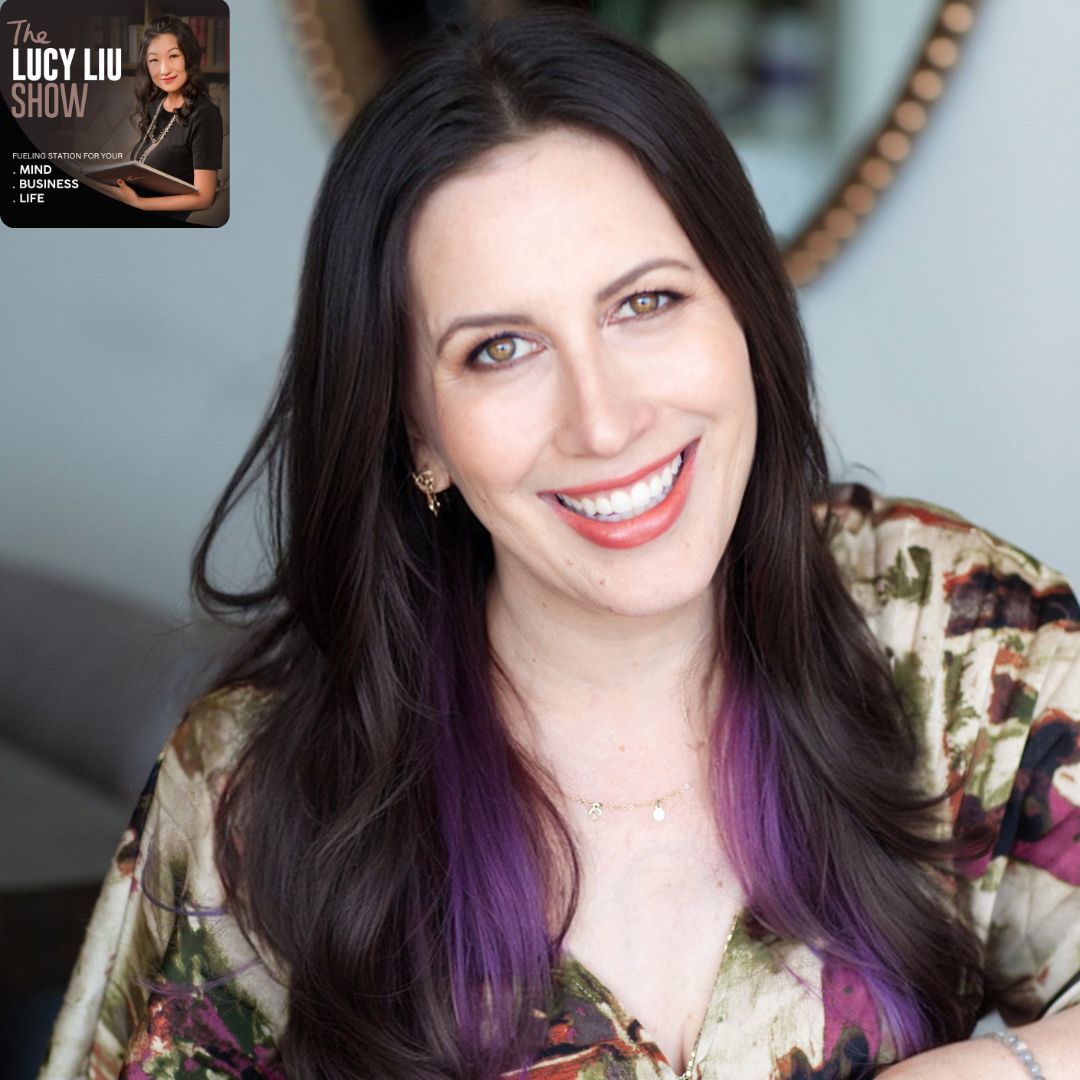
And for this very reason I have with me today award winning PR coach Gloria Chou. As a former TV producer and U.S. Diplomat, Gloria spent her entire career using various media to elevate and inspire. Now she is the host of the Small Business PR podcast and has helped over 10,000 small businesses get featured in TOP TIER media without ads or agencies.

LISTEN TO THE PODCAST

WATCH THE EPISODE
FULL EPISODE TRANSCRIPT

Hello, hello, beautiful souls. This episode is for you. If you are a small business owner, and you want your business to go from unknown to being seen, heard and valued.

And for this very reason, I have my expert with me today, award winning PR coach Gloria Cho. As a former TV producer and US diplomat, Gloria spent her entire career using various media to elevate and inspire. Now she is the host of the small business PR podcast and has helped over 10,000 small businesses get featured in top tier media without ads and agency.

Doesn’t that sound amazing? 

Welcome to the show, Gloria. 

Thank you, Lucy.I’m so happy to be here. Awesome. 

So a common theme I hear from coaching calls for whatever goal they’re working on is that they are not ready yet.

So from your perspective, who is ready for PR?

Oh, I love this question. This is the biggest roadblock. I always say, if you’re ready to take a customer’s money for whatever product or service, you’re ready for PR.

And the biggest myth that we’ve kind of all bought into is that the news only wants to cover, you know, big players and businesses of a certain level. And that’s simply not true. And I think this is what the PR industry wants to tell us.

So they can charge us crazy fees. You know, in New York, it starts around $10,000 a month for a retainer. 

But there is another way.

And it starts with you believing that journalists want to interview people from all walks of life. They want to feature fresh, diverse perspectives, not just the big names. Because otherwise, they would probably lose credibility very quickly.

Think about it, right? If they only cover the Elon Musk of the world or like big Fortune 500 companies, no one would really believe them. So you’re actually doing them a favor by putting your name in the hat and just sharing your perspective.

And you’re making their work easier because they are churning out content all the time.

Yes, conventionally, when we hear PR, we think of big agencies, huge budgets, right? But I know your work is all about debunking this myth that you need big budgets. 

So walk us through what kind of budgets do most of your clients work with when they first start PR?

So actually, most of my people are very bootstrapping. So they don’t really have a budget. And if you look at what’s available to them, right, if you want to get more eyeballs, you’re really doing one of three things.

One, you’re pouring all your time into social media, which honestly is not great because you don’t own it. And we know that TikTok is going to be banned. Who knows how long it’s going to take for Instagram’s algorithm to even go harder on us, right?

Right now, all across the board, we’re seeing views are down about 30%. And that’s because they simply want you to pay to boost your reviews. Or you can pay for ads, which historically, they have gone up over 400% in cost in just the last few years.

So that’s really also not great for us too. And let’s be honest, these two methods have no SEO. So you’re not really building a long-term asset.

And that’s why PR, I mean, like earned media, so that’s you getting featured in an article or you being on a podcast, not those scammy DMs that you get about those fake features.

I’m talking about like real organic features. That’s the most highest leverage marketing activity that you can do because it simultaneously checks all the boxes.

Not only does it give you credibility and traffic, but it also gives you SEO. So as founders, we always need to think, am I working smarter and not harder? And am I really creating a long-term asset for my business, which SEO and PR is, or am I just doing busy work?

And so I think having a mindset, a perspective shift of like, I am going to prioritize PR and that it is absolutely available to me. And even if I don’t have to pay an agency is absolutely game-changing for the entrepreneurs who do choose to get featured in the media.

I love what you said. So how do you get in the media for free if you’re just starting your business?

Yeah. So this is a great question. First thing is that let’s just distill what PR is.

And I think for so long, it’s been shrouded in secrecy, complexity, privilege, and at its core, PR is two things. It’s writing a good pitch and sending it out. And if you know how to do those two things, you can put it together and create a system in your business where you’re constantly planting the seeds for visibility because you never know when that garden might flourish.

Journalists have a very meticulous way of organizing their inbox. And so you don’t know when they’re going to be tasked with writing an article and they’re going to go back into their inbox and do a quick search and your name might pop up. This has happened so many times.

Some people get featured right away. Some people get featured three months later. What matters is that you need to throw your name in the hat to get featured.

And so it starts with us knowing that we are ready and that they want to hear from us. And journalists don’t care about how many followers you have. You can buy followers today.

So it’s not a popularity contest. What we need to know is that journalists are not going to buy from you and they don’t care about your product brochure and your benefits and features. So fundamentally, this involves a different way of communicating, right?

As founders, we’re so good at marketing ourselves. But I’m telling you that in order to get featured in the media, you need to take off that marketing hat and put on a different hat. And that hat is one of an expert, of an industry authority.

And so instead of leading with what you sell, who you are, the results, you want to lead with things like what is the seasonality of things? 

Is there any seasonal relevance? Is there a greater news trend?

Is there something trending on social media? Can you give commentary? 

And so I always talk about the 10 top angles that get you featured and seasonality is one of them.

For example, at the time of recording right now, it’s new year. So new year, new angles, habits, wellness routines. If it’s around graduation, it could be something around career advice or job seeking.

If you are in an industry that’s very heavily regulated like pharma or healthcare or taxes or finances, there’s always a change in policy and regulation. And that is always newsworthy. Also think about ways that you can take a contrarian angle.

So if all the experts are saying, do it this way. And you’re saying, I found this to be helpful. That’s a great angle.

Another great angle is to piggyback on what people are already talking about. So right now there’s a lot of news about AI. There’s a lot of news about what’s happening in the world.

So think about what are the changes happening in your industry and how can you pitch according to that? And so these are the big ways that you can start to formulate your story angle. Because remember, there’s no such thing as a newsworthy company or product.

I’ve written pitches for bath salts and candles. They all get featured. It’s just about tailoring your story into something that has seasonality and relevance to the news cycle.

Would you say pitching is a numbers game or more of a strategy and technique? Yeah, I think it’s both. I think once you have your three or four buckets of topics that you want to talk about, and then you have your…

Again, remember PR is writing a pitch and sending it out. And then you have your media list of who to send it to. And obviously in our program, we have a database of like 100,000 journalists.

Then it becomes a numbers game. Yes, because you want to be able to keep sending it out and you want to keep following up. A lot of times the biggest mistake is that, okay, the founders sent a pitch and then they’re hiding in the bathroom because they’re like, oh my God.

It’s a very unnatural act. And so don’t feel bad that you’re afraid or anxious, but just know that this is how news has been for decades. They accept cold pitches.

Journalists understand that people cold pitch them. And it’s just a matter of doing it and feeling comfortable pressing that send button. I had a student who actually ended up selling his company and now he’s building his third startup.

And he got so much press success. And he told me, everything you want is on the other side of that send button. So if we can orientate ourselves and realize that it’s just a numbers game and you just have to keep pressing that send button, it becomes less daunting.

And trust me, from all the journalists I’ve talked to, they’re not sitting there on their thrones, judging us, thinking, oh, well, this Gloria sent me a pitch again. No, they don’t have time for that. They are writing out stories and it’s just about you putting a story in front of them so that they can use it.

And so always think, how can you be of value to their audience? What is your audience looking for? And there’s ways around that.

You can find out what are the Google search trends, what’s happening. And then there’s also other ways you can find journalists. So we can definitely go into that.

But I’ve given you what to think about in terms of what to write. And the other part of PR is, okay, now you have what you want to write, who do we send it to? And you can find that online.

I mean, this is public information, but I would first install a Google News Alert, which is free, by the way, Google News Alert about your industry. And it’ll give you all the articles written about on your topic every day. And it’s as simple as you copy and pasting the writer’s first name, last name, and email, which is again, public information into an ever-expanding Excel spreadsheet.

And then sooner or later you have your own media list. You can also use things like Quoted or Haro, which now has changed. But basically there’s all these websites where you can sign up as a source and journalists are looking for people to interview every day.

And you kind of can see what the inquiries are. And if you do fit the description, then you can respond, right? You can also follow hashtags on social media, whether it’s LinkedIn or Twitter.

And a hashtag I like to follow is journal requests. And it means that journalists are requesting certain types of interviews with different people. So these are kind of the grassroots way you can kind of figure out who might be interested in writing about you in a kind of a more reactive way.

But let’s talk about other times of year, right? How do you just pitch a story if they’re, let’s say, not saying, oh, I need to interview someone. Well, one way to do it is to know that you need to find who are the writers covering your industry or beat.

So you’re not going to be sending an email to editor at buzzfeed.com because they’re not reading it. You need to find out who is the specific industry writer. So if you are someone in fitness and health, it might be the fitness or health writer.

If you are someone who makes a physical product, it might be the shopping or commerce writer, commerce writer. If you’re in travel and luxury, it could be a person that covers travel. So do you see where I’m getting at?

You want to find the specific writer who is writing about your topic. A lot of writers now are freelance, which means that they write for multiple outlets and they’re constantly kind of rotating around. And you can find out where they’re writing by just simply going to their Instagram bio or their Twitter or LinkedIn bio to see where they’re writing.

That was a lot of goodies. Thank you so much for sharing, Gloria. 

And I remember in the early stage of me pitching to be on other people’s podcasts or opportunities, it was really daunting to hit that send button, as you talked about, right?

It’s about just hitting that send button, but it’s it could be hard in the beginning. And what helped me was instead of hitting send, like getting that emotional roller coaster ride right away, I used to schedule them out for another time, like in the afternoon or the following morning so that it didn’t feel so stressful. And then when it actually went out, it wasn’t on my mind. So that took off a lot of load for me. 

Yeah, no, that’s so good.

And you can also schedule send, right? Like there’s a lot of different things where it’s like, as long as you have your pitch, you load it in there and then you can schedule send. And here’s another great tip for your audience is don’t send any emails until you have an email tracking software.

And this is great because it tells you if someone is opening your email, if someone is clicking it. And that way we don’t have to have this drama in our head about, oh, this journalist hates us because honestly, they don’t care about you. They’re very busy.

And so if they’re not opening it, we need to solve for that first. So is it a deliverability issue? Is it an out of office issue?

And then if the email tracking device is saying that they’ve opened it and they’re actually opening it multiple times, your pitch, it means that they really like it. They’re just looking for a place for it. That’s when you would go in with a followup, engage with their content.

Remember, journalists are people and they have egos. So like compliment them and say, hey, I love the article that you wrote last year on this. Are you doing the same for this year?

Or I think it’s fabulous that you wrote an article on this. So like having a compliment and like showing them that you’ve read their article is such a great way to start an email off.

Such good advice. I love it. I love my email tracking.

And that goes the same with clients who, if they’ve opened my mail eight times, you know, they’re more interested than someone who’s just opening it once. Right. So it goes a long way.

You talked about mistakes. I love what you mentioned. Are there any other mistakes that you’ve seen people do wrong with PR?

Yeah. So I teach a proprietary CPR pitching method and that’s from just cold pitching thousands of times. So fun fact for your audience, I’ve never worked a day in my life in any PR or marketing agency.

So being an outsider and not having any contacts, I had to cold call the operator at the New York Times. And I think from just cold calling and emailing and just getting honestly rejected so many times, I started to figure out, okay, what gets someone to respond and what doesn’t. And I put it in this framework called CPR method, which I teach inside my program.

But basically CPR stands for credibility, point of view, and relevance. And you want your pitch to have all three elements. And so if I’m pitching someone, let’s start with the subject line.

The subject line should not have your name, your company name, or the word pitch in it, because it’s relevant to the journalist. Instead, you want to have something that’s timely and specific. For example, three top communication tools for 2025 for introverts.

Do you see how that’s timely, relevant, and specific? And then if you are to start the email off, you want to start off with the relevance, which is the R in CPR first, because you want to get their attention right off the bat. So talk about as people are looking for X, Y, and Z tools to start off the new year, because right now it’s Q1.

Do you see how that’s relevant? And then you have the P in CPR, which is point of view. So usually three bullet points.

So that could be three insights, three tips, three contrarian things, three data points. And then you want to conclude with one sentence credibility. 

Don’t go too crazy here.

You don’t need to have lots of previous press mentions. It could be as simple as, I am a founder, and here’s what I’ve noticed with my audience. I’m happy to chat more about these insights, and here’s how I can be reached.

Do not attach your pitch deck or your resume, please. It’s going to trigger their spam filter. Instead, use a hyperlink and say, I’m happy to share more.

Here’s my story. You can click here. If you are in e-commerce or product, you could probably embed one photo because it’s visual.

And then for more photos, you can attach a link to a Dropbox link or more high resolution photos. So use the hyperlink.

Love your tips. Thank you so much for your knowledge. And if people want to learn more about doing PR the easy way, where can they find you?

Yeah, for sure. So I have a free PR masterclass that actually shows you word for word, a CPR pitch. I got someone featured 12 times without any PR agency experience or context.

And I show you like word for word. And you can watch that at Gloria Chow PR dot com slash masterclass. That’s Gloria Chow PR dot com slash masterclass.

And I’m on Instagram as well. So I share a lot. I share anything from healing generational trauma with my mom to funny Cardi B memes.

So you’re in for a ride. 

You can hit me up on Instagram at Gloria Chow PR. And if you DM me the word pitch, I will also give you an additional freebies that you can take the first stab at your CPR pitch.

Beautiful. And what is the favorite quote you go by in life?

Oh, I love this quote by my Maya Angelou. And she said people will not remember what you said and what you did. But they will always remember how you made them feel.

I love this so much. Thank you for being with us

Thank you, Lucy.

Learn more about Lucy's coaching:

250. How To Stay Focused

Hello, hello, beautiful souls.

This episode is for you if you feel scattered all over the place and want to learn how to stay focused so that you can stay on track to accomplishing your goals this year. 

I’ve previously talked about this. Being scattered is a bad habit that can kill your confidence. 

The good news is being able to stay focused is a learned skill. 

So here today, I present to you the seven action steps to help you stay on track.

LISTEN TO THE PODCAST

WATCH THE EPISODE

The first step is to be super clear about your goals. 

When you write down your goals, if in any way you feel it’s unattainable or impossible, that just means you haven’t chunked it down small enough yet. After you write down your goal, ask yourself this question.

From a scale of 1 to 10, 10 being most likely, how likely are you to accomplish this? 

If your answer is anywhere below an 8 or a 9, that means you have to chunk down the goal even more. Make sure your goals are smart, specific, measurable, relevant, and timely. 

I’ve talked about SMART goals in another episode, so you can refer there.

The second step in staying focused is to plan and prioritize. 

We will always only have time for our priorities. So it’s important to consider your most important tasks, and we call them MITs.

These are things you need to take action on that will actually move the needle, that will actually help you move towards your goals. So these are the actions you actually want to be taking. Use Google Calendar and other tools to help you schedule in your priorities.

And don’t forget to structure your day around your non-negotiables. Non-negotiables are activities that you absolutely will not give up and negotiate of not having them in your life. So for me, that would be eating my meals on time, sleeping on time.

I know exactly what time they need to go in my calendar, and then I schedule my work around that. 

The third step is to time block. 

Establish daily routines that incorporate dedicated time blocks for your goals.

When I first learned about time management, I was doing half an hour blocks. So that means 25 minutes of focused work and then five-minute break. And then you repeat again for another half an hour. 25 minutes of work and then five minutes of break. 

Later on, I learned there’s actually a name for this technique, and that is called the Pomodoro Technique, which is exactly just that. 

Stay focused, sharp, and crystal clear on what you’re doing for the next 25 minutes, and then take a break.

This structured approach keeps the mind alert and engaged, and significantly reduce the tendency for you to procrastinate, and therefore a deeper focus. 

The fourth step to staying focused is to eliminate distractions. 

It’s normal, we all have them.

We all have millions of thoughts a day, many of them repetitive, unnecessary, unproductive thoughts while we’re working. 

So it helps to minimize these distractions if we have a cluttered workspace, clean environment, clear mind, decluttered space, declutter your mind. So of course, turn off notifications when you’re working.

In the beginning, it might be hard. When I try to stay away from my phone in the beginning, I would actually leave it in another room. So I don’t have the tendency to play with it while I’m supposed to be focused on something else.

You bet now my phone is on silent most of the day. And I love to use countdown timers. When you’re on YouTube, simply search for countdown timer for five minutes with relaxation music, or for however minutes you want.

There is a ton. And don’t forget to feel free to clearly communicate with those around you about your boundaries and how you wish to stay focused so that they’re not distracting you. 

The fifth component in staying focus is to manage your energy.

Remember that you are the CEO of your life. 

And that means you are the chief energy officer of your life. So you get to manage your energy, you get to decide where you let your energy go.

So work during your peak energy hours. And for that, everyone’s different. You could be a morning person, you could be a night out, there’s actually no right or wrong answer as to when you are productive.

I’m a morning person myself. So I schedule my calls in the morning. And even once in a while, I do open up my laptop at night, if I’m replying an email, I will still schedule it to go out the next morning.

So that way that recipient will receive it during my working hours. And therefore I’m letting them respect my working hours. And that’s when you can expect a reply from me is during the daytime.

Of course, good habits like staying hydrated, getting good food, healthy food, and enough sleep. Those are all essential. And stay motivated by celebrating small steps.

What gets celebrated gets repeated. So no matter how small of a win, feel free to celebrate it. Keep a reminder like a mantra or vision board or a phone screensaver, wallpaper, whatever that reminds you of what matters to you, sticky notes on the wall, whatever works for you to remind you of where you’re headed.

And because we’re human, because we have bumps on the road, because we forget. 

And that’s where number six comes in is to leverage accountability.

Check in with your accountability partner, or even better yet, share your goals with a coach because your goal is your coach’s goal. And as a coach myself, I know I am not judgmental.

I don’t care what your goals are. But if they’re your goals, they’re my goals. And last but definitely not least, and actually very important.

The seventh step is to be kind to yourself. 

Recognize that focus actually comes and goes. So avoid beating yourself up.

Don’t beat yourself up. Simply have more awareness when you lose focus and pull yourself back up. Meditate or use other mindfulness techniques.

There are tons of apps to help you stay grounded. But what’s important is you want to train your mind to be more focused. So being grounded is a great way to help the mind get there.

When your mind wanders, guide it back without being harsh on yourself. Time to time reflect on your progress, what’s working, what’s not. And remember that it’s okay to pivot.

It’s okay if something went wrong. It’s okay if things are not going the way you thought you wanted. And it’s okay to adapt.

These are great skills. And therefore, together, collectively, you are practicing your skill of staying focused. Keep restarting when distractions happen.

Persistence matters. Consistency matters more than perfection. 

So which one of these steps are you working on? Message me and let me know.

Learn more about Lucy's coaching:

249. How To 10X Your Life and Business with Maya Elious

This episode is for you if you want to start off the year right 10 x your life 10 x your business, whatever your goals you have, because my expert is just about that. Maya Elious today I have with me is an award winning business coach, personal branding strategist and the go to expert when it comes to clarifying your message and attracting high end clients. Doesn’t that sound good?

Maya is the CEO of built to impact and through her programs and live events. She’s helped 1000s of clients built six figure businesses and has been featured in top publications like black enterprise, Forbes Business Insider. 

LISTEN TO THE PODCAST

WATCH THE EPISODE

FULL EPISODE TRANSCRIPT

Welcome to the show, Maya.

Oh my gosh, thank you so much for having me. I’m excited to start off the new years with you and the listeners.

Thank you. Well, it’s the beginning of the new year. And we all are looking to 10 x our life business, whatever, right?

But what does 10 x your life and business actually mean to you, Maya?

When I think about 10 x in my life, I think about how can I create a big enough vision that forces me to completely shift my identity from who I am into who I have to be to have the money that I want the relationships that I want the life that I want. 

So when I think about 10 x, it’s not just about, oh, here’s a couple different, you know, new things that I could try. It’s about who do I have to be, I need to completely shift my thinking, shift my habits and shift my routines.

I love that so much. I talk about this with my clients as well, right? You are version 1.0. Right now, say you want to upgrade to version 2.0. But actually, what you want to think about is what would version 10.0 of you think, right? What would that version of you think and act and and what kind of embodiment does that need to happen?

100% I have this live event every year in Atlanta called impact weekend. It’s actually not that far from now it’s gonna be in February. But one of the first things that we do before we even dive deep into the business strategies is we do a guided visualization exercise.

And during that exercise, I’m having them think about three to five years into the future. And I’m like, what does your house look like? What does your body look like?

What are your relationships look like? What are your biggest achievements? And then once I have them visualize that in the visualization, I also have them journal in real time, what did I do five years prior to get to the life that I have now, and then I have them just embody being that person throughout the entire weekend.

So when I’m giving them the business strategies, and they’re running into resistance, and they’re running into fear, it’s like, you already know that this is possible for you, you have to have the mindset that I can do hard things. And then I’m fully equipped to be able to overcome any challenges that would keep me from having the life in the business that I want.

I love that. And you said the key word mindset, right? So before you have the 10x life and it’s really about 10x your thinking and 10x your mindset first, right?

100% 100%. When I think about mindset, the way that I frame it with my clients, I’m like, how can we have a VIP mindset? And what does that even mean?

I have them first think about the vision because you always have to have a level of clarity of where you want to go. It’s like, well, where do you want to go?

 You don’t know what’s going to happen in your life five years from now, if you haven’t already made the decision in your mind what you want to happen.

So we have to get very, very clear on that vision. And then the I stands for identity, who is the person that you need to become? If you think about what you want for yourself five years from now, and you honestly answer the question, is the version of who I am right now capable of creating this life?

Or do I need to change some things? Do I need to wake up earlier? Do I need to start working out?

Do I need to work longer hours, you know, whatever it is starting to think about who I need to become? What are the new habits that I need to set? What are some of the routines that I need to start implementing?

And then the P’s stand for the people in the places, which really this is all about environment. Who are the people that I’m spending time with? And where are the places that I’m spending my time?

And sometimes we think about this so literally, we think about like, oh, where, you know, where am I hanging out with people? Or who am I talking to through text or on the phone or like going out to dinner with? And even just thinking about the people you’re following and the social media platforms that you’re on, how you’re allowing that to influence your mind, you have to be in so intentional about the podcast you’re listening to the books that you’re reading, the shows that you’re watching the music that you’re listening to, it can seem like those things aren’t a big deal.

But the way that we think affects our reality and the way that we think is heavily influenced by what we are watching and listening to.

Totally. And you mentioned podcast, I forgot to mention your podcast house, do and your podcast is called my podcast is called work hard, live soft.

And we just talk about what is the work that’s needed to be done. So you can live the soft life. So you can live a life that is fulfilling, impactful, and really enjoyable.

I love it. And I was listening this morning. And Maya is coming actually to us from Mexico, right?

Like that’s the soft life.

Yes, yes, I’m usually based in Atlanta. But when my lease ended, about a week and a half ago, I’m like, I want to just travel the world now. So I didn’t renew my lease, I made the decision, like, let me go to Mexico right before Christmas, just get some beach time, get some sun time, I love being by the water and getting some sun.

And then I just want to travel the world after this. I think I’ll try Columbia, I’ll try Thailand, I’ll go back to Bali. So I’m really excited to see what 2025 has in store in terms of just new revelation and exploring the world and exploring just my own growth.

That’s awesome. That’s just so awesome. And I mean, people say I’m going to travel, but a lot of people actually don’t do it.

Right? Like people say, I love traveling, I want to go travel the world. But where Where have you been?

Right? Right, you’ve been saying this, why haven’t you gotten that passport stamps? Why haven’t you booked the flight?

Yeah, but you know what, sometimes I mean, I absolutely believe in baby steps, because most people are actually doing nothing. They’re not taking any step forward. So even if you take baby steps, that’s actually what it takes to help move you forward.

So baby steps is always better than inaction. And inaction is a decision. And it’s all about decision making, right?

The type of decisions you make each day will add up to your entire life. But sometimes I feel like, yes, I believe in baby steps, but expedited growth could actually be easier than slow growth, meaning 10x is actually easier than just only two x in your life. Would you agree with me?

Yes, 100%. Just doing the big scary thing versus trying to tiptoe in. It’s kind of like, you know, when you go to the beach, or you go to the pool, and you’re like trying to put your toe in or you’re trying to slowly go in because you’re afraid to be cold.

And it’s like, girl, just jumped in, it’s gonna feel so much better if you just jump in versus trying to tiptoe in and feeling the slow pain along the way.

But, you know, we’re not talking about 10x like working 10 times the amount of hours that you do now. Okay, we’re not talking about that. We’re not talking about doing more work, because a lot of people feel like you actually need to do more work in order to make more money or accomplish more.

But I think what I preach is that we can actually accomplish more by doing less because we value our time more because we stay more focused. 100%.

Yeah, I completely agree with that. It’s not about doing more. It’s about having a bigger vision.

So what you do, you can maximize it better, and you can leverage it better. So even like when I think about my work ethic at you know, $100,000 versus my work ethic at a million dollars, I still had a lot of great work ethic. But a big difference with 10x in my revenue was not working harder, it was thinking bigger, and then making sure that I had the support and communicating that vision to the right people who could help me execute that vision.

Like if you’re trying to work your way to 10x, you’re going to get burnt out at about 3x or at about 5x, you have to think bigger and then say, what’s the type of work that I need to do so that way it gets better results faster. It’s kind of like going from one on one coaching to going to one to many. It’s like I can have the same results, but I’m spending this the same or less time working to get better results.

And you mentioned going from 100k to a million, like what is the biggest difference for you?

I think the biggest difference is honestly vision and having people who can help me execute that vision. When I was making $100,000, I remember the year before I had my first six-figure year, I made about $89,000. And I knew that I was like, this $11,000 gap is not a missing strategy that I have in place.

I knew for me, it was something mindset related. And so I asked myself and I’m very reflective and I asked myself questions and I’m like, what was that $11,000 gap? Why didn’t I make $100,000 when I had done five-figure months consistently and I was doing very well and I had a good audience.

And I know for me that it was, I lacked boundaries and there was a limiting belief that I didn’t deserve to make $100,000. And that limiting belief came from the fact that I was always the person amongst my friends and family where if they needed something, I would step in. I was that person that was essentially like a savior.

Like I just was not good at boundaries. And so one of the things that I had to figure out was how do I establish boundaries so I don’t feel like I have to give all of my gifts and all of my resources away for free. Once I started to develop my mindset around boundaries, I made, I think maybe like $150,000 a year later.

Then three years later, when I made that million dollars, I expanded my thinking and my beliefs to what was possible for me. I think we can work our way to $100,000. And then when you’re going to a million, your mind really has to shift into believing that not only can you do it, but that you’re deserving of it.

At any point, if you don’t believe you’re deserving of it, you’re going to ultimately self-sabotage the work that you’re doing or the opportunities that you attract or self-sabotage and you subconsciously reject. And so I think I needed to believe that it was possible. And I also needed to release a little bit of control on the how.

I remember writing down like prayers and affirmations. And I remember writing down like, I am so happy and grateful that I run a multimillion dollar company, helping women of faith without sacrificing my integrity. I knew what I wanted to do.

I knew the type of person I wanted to be when I hit that goal, but I didn’t have enough experience in business to know exactly how I was going to do it. I had some ideas in my head. And I think just having the vision, writing it down, making it plain and holding that vision every single day, you start to transform into the person who can attract that and actually build a million dollar business.

I love that. I love how you mentioned you’re attracting, you’re not begging for it. You’re not desperate, right?

Because sometimes women resort to a different energy when they’re not doing as good as they imagined. And they’re just desperately seeking the next marketing technique, or, you know, a different business coach that’s going to just magically wave someone and help their business. But I love how you your example was your boundaries, right, your control, your worthiness, it always comes back to self worthiness.

So it’s always about personal development, no matter where you are in life and business and career, wherever you are in life.

100%. And I love what you said about desperation. Like one thing that I tell women in my community is that desperation causes you to dismiss your discernment.

You make decisions differently when you’re desperate versus when you are feeling empowered. And when you are desperate, you’re grasping for anything. You’re not making decisions using wisdom, you’re making decisions from a lack mindset of like, let me just work with this person, or let me just sell this thing, or let me just price it here, because I’m so desperate, I need to make this money, or I need to be able to have these opportunities.

But when you have a strong belief that this is possible for me, and this is the standard at which I want to operate, you are confident saying no to more things, right? Here’s where boundaries come back into play, where you’re like, I’m okay with saying no to this thing that has been presented to me as an opportunity, because discernment has already clearly communicated to me that this isn’t for me, and that what is for me is not going to pass me by, because I’m feeling confident, and I’m feeling empowered. And I don’t need to operate with this level of desperation thinking that if I say no to something that I’ll never get the opportunity that I desire.

Beautifully said. So with your clients, what is the number one mistake you see them making that’s killing their confidence?

Oh, that’s killing their confidence. I would say, probably two things. I think comparing themselves to other people, and just like part of that comparison is making an assumption that what somebody else is doing is working.

Whether or not it’s working for them, it’s like, it doesn’t matter what’s working for them. Girl, you got to figure out what’s working for you. And so they’re making this comparison that this person is better, that what this person has going on is working, and whether or not it’s working.

The other mistake is your work ethic isn’t even matching. So if you’re going to compare somebody’s results, you better compare the work ethic. I don’t want to hear that you’re jealous that somebody made money.

I don’t want to hear that you feel a type of way that this person isn’t as talented as you, but they have more recognition. They’re still doing the work. And at the end of the day, when it comes down to business, the best marketer wins.

So if you’re not willing to create the content, you’re not willing to go live, you’re not willing to be visible, you’re constantly trying to build a business where you don’t have to do sales calls, you don’t have to do webinars, you don’t have to create content, you don’t have to write emails, you have no right to be trying to compare yourself to somebody who’s actively doing the work. And confidence comes from seeing the results from the work that you’re putting in. And so consistently, oftentimes what I see with people is that they’re upset about results that they didn’t get from work that they didn’t do.

And it’s like, it doesn’t work like that. You’re going to have to put in the work. And then we could start talking about maybe what we can tweak within your work for you to see better results.

Oh, I love that. I remember my first business coach, she really inspired me because she was making six figures with a email list of 400 people. So she was like, it doesn’t matter the size, it’s about what you are actually doing.

And I know this reminds me of one of your Instagram posts where you showed your past videos, like, you know, where you said, it’s not overnight success. So it’s like a 10 year in the making where you showed your videos from the past where there’s bad video quality, bad audio quality, when you said you had 30 subscribers, we all start from zero, right? There’s no overnight success.

We’ve all been there.

Yeah, yeah. And I think that goes back to your point where you said you believe in baby steps. And I love one of one of my inspirations is reading the Bible and just taking scripture and saying, How can I apply it or use this for And the word says that don’t despise small beginnings.

And I think sometimes we are when it comes to 10 xing, it is about 10 xing your vision, but also knowing what work needs to go in place to see that vision come to fruition. And it’s like the version of me that started when I was 18 years old, the version of me that started with zero, the version of me that started with janky video quality, janky audio quality, and not knowing what she was doing. Had I not been that version who was willing to start willing to fail, willing to look silly in front of people, willing to risk, you know, not looking like the perfect example of a brand strategist or the perfect example of an entrepreneur had it not been for that version of me that was willing to start small to then get something bigger, I wouldn’t be where I am right now.

So I just have to encourage everybody while you’re thinking about the bigger picture, you have to say, but what steps am I taking right now today in every single day to make sure that I am growing as a person because I have to do something today in order to make it better. Most people are so riddled with perfectionism because they’re so afraid to fail. And it’s like, you can’t perfect anything that you haven’t started.

You can’t make anything better that you haven’t put out into the universe. So take the small steps so you can live the bigger life.

Beautiful perfection is illusion. And practice leads to improvement, not perfection anyways.

Right? It’s like, perfection totally is an illusion. I’m like, I haven’t done anything perfectly yet. And I’ve been for over a decade.

Awesome, Maya. Well, on your low days, what is one quote that you go by that’ll help you pick yourself back up?

A quote? I don’t know if it’s a quote, more so than it is a perspective. I, I really operate with a perspective of gratitude.

And I think about how the worst part of my day or the most annoying part of my day truly highlights how blessed I am. If it’s like the worst part of my day was I had to walk in the rain and it’s like, well, girl, you are able-bodied and you’re able to walk. Or the worst part of my day was that I didn’t hit my revenue goal.

And it’s like, well, thank God you have a business where you’re hitting goals to the point where you feel sad that you didn’t make as much money. And so I think just having that perspective of, if this is the worst part of your day, you have a very rich life.

I love that. Thank you for sharing. Awesome.

So where can we find you?

Yeah. So you guys can find me on Instagram at Maya Elias, M-A-Y-A-E-L-I-O-U-S. I would love to connect with you.

And if you’re mapping out your 2025 goals and you want to see how I plan my year and my life in business, you can go to mayaelious.com slash dream life. I have a free dream life planner on there that I think will be very helpful for you.

Awesome. Thank you.

Learn more about Lucy's coaching:

248 Top 5 Bad Habits Killing Your Confidence

Hello, hello beautiful souls. Happy New Year!

It’s the beginning of the new year and everyone is super motivated to start the year fresh, I know.

So let’s make a difference and see changes to life this year.

To start off the new year, I’d like to start with going over the top five mistakes I see people make in hindering their growth.

So please remind yourself to avoid these bad habits at all costs if you want to have a great year, boost your confidence and fulfill your highest potential. 

LISTEN TO THE PODCAST

WATCH THE EPISODE

I’m not going to do a backwards countdown, five, four, three, two, one.

I’m going straight to number one because it’s so important that you get this habit out of your life now and that is not keeping promises to yourself.

That includes not showing up to appointments, signing up for online webinars, workshops, in person or online of course, being on time, workout, walking the dog, whatever it is.

Think back to the last time you did not keep a promise to yourself, okay?

Because not keeping promises to yourself is often considered the worst habit because it absolutely kills your self-trust, personal confidence and personal growth.

When you consistently fail to keep promises to yourself, you begin to doubt your own commitment and reliability.

This internal mistrust makes it harder to set and achieve future goals because deep down, subconsciously, you already no longer believe in your own abilities to follow through.

Each time you fail to keep a promise to yourself, it can trigger harsh inner criticism.

This cycle of negative self-talk will most likely be the cause of your self-sabotage.

Each broken promise, big or small, they reinforce the habit of procrastination, making it easier for you to justify putting things off, making more excuses for yourself and it becomes even harder to establish discipline to accomplish all your goals. Confidence is built through small, consistent wins to proving yourself that you can meet your commitments.

When you make a promise to yourself and keep the promise, you’re making a small deposit in your confidence bank.

And don’t we want that bank account to grow, right? So start small.

Even the smallest promises to yourself are critical.

For example, I promised myself to never hit the snooze button in the day, each day, knowing that the minute I wake up, I’ve kept my promise to myself and I am able and I am a reliable person and I can make things happen. So keep going, make promises to yourself that are realistic and achievable and actually follow through each day.

And over time, this will build your self-trust and confidence, creating a very positive cycle of growth and self-belief. Make a promise, keep your promise, that is working out your confidence muscle. We go to the gym to work out our physical muscles, so do this to work out your mental muscle.

The second habit that I see so often killing people’s growth is absolutely overthinking.

Oh boy, how I love this one because not only do we overthink, we actually then spend more time overthinking how we have wasted all that time overthinking. My favorite example was when a client said, Lucy, I realized I’ve been overthinking lately and then I realized yesterday I just spent one whole hour thinking about how I’ve been overthinking so much lately.

You see, that starts another cycle of harsh inner criticism, self-sabotage, procrastination, you name it.

This one bad habit of overthinking can trigger so much emotions and other bad habits that you go into inaction and negative spirals. So be very aware of holding yourself out of this habit intentionally.

When we overthink, we tend to not take action and put things on the back burner. And once it’s there, it might be there for a day, month, a year. And this is especially true for women.

We tend to not go for things until we feel 100% ready. And even when we are ready, we feel we’re still not ready. There’s always a missing piece, right?

There’s always not the right time. You’re always too busy. There’s always excuses.

So it’s really about whether or not you want something done. And once you’ve determined that you have a clear goal, there is something you want to do, stop overthinking. Yes, you want to think about the strategic planning and the action steps you will actually take to get there, but not to just sit around and think about all the possibilities that could go wrong, right?

Instead, think about all the opportunities that might arise from you taking more action.

Okay, the third habit is being scattered. I see this so much on coaching calls.

You want A, you want B, you want C, D, E, F, G.

I mean, that is great. That’s amazing. But you got to stay focused and just take action towards A first, right?

Because sometimes when we want the whole alphabet, we’re looking at Z as in zebra and thinking, oh my goodness, that is so daunting. That is so scary. I will never get there.

And therefore, you’re not getting anywhere. So stay focused. And this topic is so essential.

I’m actually going to do another whole episode just on how to stay focused. But for now, just always remember what you focus on growth. So only focus on your own growth and one area of your life or business or career that you like to focus on.

Yes, Lucy is a believer that you can have it all, but just not all at the same time. Lucy is a podcaster, an author and a coach. Well, I am all of that, but it did not happen all at the same time.

I launched my podcast and then I co-authored in a book and then I wrote my own book and it happened in baby steps, but I focus on one goal at a time. And so should you. If you have 10 things you want to do in the next year, let’s circle your top three and then decide on your number one and go do that.

This is the fourth habit that’s absolutely killing your confidence is negative self-talk, that inner critic, that little devil voice.

We got to listen to the angel, right? The angel, the devil says, you can’t do this.

Who are you to do this? Why are you doing this? Right?

And the angel is saying, you’ve got this. You are amazing. You are remarkable.

This is the perfect time. So which voice are you listening to? I’m hoping that you will have more awareness in your self-talk after today.

Whenever that negative self-talk arises, notice it and just make peace with it. Okay. I hear you, but it’s okay.

I’m going to go with my decision. I’m going to prioritize my life according to my values and I’m going to do what’s on my dream agenda. Notice some of the negative things you say to yourself.

Would you say them to a friend or is that to me? You’ll probably notice they are too cruel to be said to anyone else, but yourself. So don’t let that devil voice control your life.

And it’s usually really scary to go for your dreams and live your dream life because I’ve just absolutely lost my train of thoughts. And that just proves we’re all human. Now I could be saying, Oh Lucy, you are horrible.

You don’t deserve to be a podcaster. You’re not well-spoken. You’re not charismatic like other speakers, right?

See, there’s so much things you can say to yourself, but on the other hand, you can say, Ooh, I’m glad that happened.

This is a great example to show people that we are human and we all have these moments, right? These moments that we get to practice being more positive. These moments that we can learn something from and inspire others to speak up, show up and know that what’s possible for them is to stop listening to that negative self-talk and really just rise to the occasion.

Oh, and don’t focus on your fears. Don’t focus on yourself.

Usually when we are focusing on ourselves, we’re thinking, Oh, what are other going to think of me?

Who am I to do this? But focus more on serving others. No matter what line of job you are in, no matter what line of work you’re doing, you are here for a purpose.

You are making someone else’s day. So focus on the importance of you on this planet. And that’s how you shush your inner critic is by living your purpose.

It’s by living what you are put on this earth to do. And I know some people might have not found that, but again, you find that through taking action, because in the process, it could be that you actually find out what you’re doing now is not serving your purpose. And that’s also progress.

So all we have to do is make progress, not perfection.

The last one course, not the least is people pleasing and giving explanations when saying no. This is a really bad habit because we are pleasing others.

We’re saying yes, when we really mean no. How about that event that you’re going to? How about that dinner you’re going to?

When it’s a no, it’s a no. You do not have to explain why you’re not going. Thank you for the invitation, but I will pass this time.

It is that simple. Hello, sunshine. You deserve all the sunshine.

You deserve all the best in this life. So live life by your own design. You have the right, the birthright to choose your priorities in life.

When things are not going well, just remember that it’s temporary. You might be working on something that you don’t actually like doing. Remember that even life is temporary.

So focus on your end goal. Focus on where you are going and say no to everything else. So which one of these bad habits do you find yourself struggling with?

Or which one do you resonate with? Leave a message and let me know.

Learn more about Lucy's coaching:

247. More Trust More Credibility & Better Reputation with Lida Citroën

If you want to learn how to build trust, credibility and have a good reputation, this episode is for you.

LISTEN TO THE PODCAST

WATCH THE EPISODE

Today’s guest Lida Citroën is an executive coach, personal branding expert, reputation management pro, 5x published author, TEDx speaker, LinkedIn Learning instructor, and a trusted consultant to clients like Google and Disney. For more than 20+ years, she’s helped hundreds of global executives, entrepreneurs, and thought leaders like you impact the way they’re perceived by the people who matter to them. Discussed in this episode: 

  • Difference between trust, credibility and reputation
  • What gives a person more credibility
  • What it takes to be a person of influence
  • How can we gain confidence in ourselves as an authentic leader
  • and much more

FULL EPISODE TRANSCRIPT

Hello, hello, beautiful souls. If you want to learn how to build trust, credibility and have a good reputation, this episode is for you. And for that, of course, I need an expert expert with me.

And she is… Lita Citroen. She is an amazing executive coach, personal branding expert, reputation management pro, five-time published author, TEDx speaker, LinkedIn learning instructor, trusted consultant to clients like Google and Disney.

Oh my goodness, she is so, so amazing. I cannot wait for you guys to meet her because for more than 20 years, she’s helped hundreds of global executives, entrepreneurs and thought leaders like you impact the way they’re perceived by the people who matter to them. Welcome to the show, Lita.

Thank you so much. I’m excited about a great conversation. Awesome.

We’re talking about building trust, building credibility, reputation. Is there actually a difference between the three?

Very much so. I would say the only two that are kind of close would be trust and credibility. Because if I don’t trust you, I probably won’t see you as credible.

I mean, if I see you as credible, I probably trust you. Reputation sort of sits along with that. So reputation is what you earn.

Personal brand is what you do. That’s how I typically explain it. Everyone has a personal brand by design or by default.

And we’ve all been going through life, building our careers, doing wonderful work like yourself and building this reputation alongside. The thing is, most of us aren’t thinking about what we’re doing. So that’s where people like me come in to teach personal branding.

What gives a person more credibility, would you say?

The way I explain credibility is that it’s a very simple formula. If you tell people what you stand for, and then they see evidence that you live those values, you walk the talk, they will learn to trust you. They will give you credibility for what you say you believe in.

Where the problem often lies is people aren’t clear on their values. They aren’t clear on what they stand for, or they try to be everything to everyone. And then the action isn’t really matching up.

And they wonder why no one takes them seriously or why they’re not trusted or seen as valuable for what they know they can offer. Similarly, I work with a lot of people who have those values very clear in their mind, and they know from which they operate, but the action isn’t tied to it. So I might act with honesty.

I might speak directly to you and give you very forthright feedback. But I’m not telling you why I’m doing that. I’m not telling you that my value is honesty.

And therefore, you think I’m just a mean person, or I have it out for you, or what got into me today, right? Because that isn’t tied to the value. So the values plus the action, they have to be connected in order for people to give you credibility.

One example I often share is I do this work in the military. It’s a passion project for me. I’ve been serving the military space for about 15 years now.

It comes from my values of gratitude and generosity. That is absolutely what led me to serve in this way. And then I started doing the work.

But I had zero credibility because nobody knew who I was. And I had to anchor my action in those values. So if I’m standing in front of a conference audience, where I’m writing a book for the military, or I’m coaching someone, I have to make sure they know why I’m doing that behavior, why I’m doing that action, that it comes from a value of gratitude and generosity.

Then people start to trust that that is actually credible.

And, of course, we want a good reputation. Yes. It goes a long way, but can our reputation be changed?

It absolutely can. And so there’s this niche of work that I do, which is called Reputation Repair. And actually, one of the books that I’ve written, called Control the Narrative, is the only book that offers solutions for individuals who’ve been in a reputation crisis.

And I run into people who, it can be as almost, I wouldn’t say innocent, but as simple as you post something on social media that you’re not thinking about, and it turns into a firestorm, or you’re caught on an open mic, or it’s even more egregious, right? Plagiarism, doctors being inappropriate with patients, and all sorts of things can destroy our reputation. There’s absolutely a way out of that.

Most of the people I work with do the wrong thing first. They take down their social media, they go into hiding, they don’t answer their phone, and they let the narrative play out. Not a good response.

So even if it’s not something like headline making, but somebody listening says, well, I kind of didn’t show up well in a meeting, and I lost my cool, and now my boss is looking at me like, maybe I’m not management material. There are ways to repair that, that involve obviously apologizing, if that’s warranted, and understanding what needs to be fixed, and what’s okay to leave alone. So I would love to give some blanket advice, but oftentimes it’s individual to the situation, and how serious the impact is.

To us, it will always feel worse than it does to other people. So someone who engages in a debate with a troll on social media, and it turns into a really big problem, is it a big problem for your career, or is it a big problem because your feelings got hurt? There are a lot of remedies.

Yes, it absolutely can be. There have been a few circumstances that I’ve run into or heard of, where the person isn’t able to recover in the way that they want, and so they look at other options. Career changes, location changes, things like that.

And of course, we want the good reputation, we want credibility, because we want to be a person of influence, right? So what do you think it takes to be a person of influence?

I love that question, because it’s a topic I’m speaking a lot on right now, because that’s all changed. So I wrote the book, The New Rules of Influence, and in it, I sort of challenged this idea of what influence used to be. You mentioned in your intro, I spent 20 years in the corporate world, 20 years doing what I was prescribed to have success, right?

You look a certain way, you act a certain way, you wait your turn, and then when you’re called upon, you get to speak. And I would say that is particularly true for those of us who are women, those of us who don’t look like the poster child, if you will, or are part of a community that’s maybe underrepresented in most corporate environments. We’re not sure how to speak up and how to be heard and have our message carry weight, which is what influence does, if we don’t look and sound like the prescribed model of executive presence.

So what I’m trying to introduce is a new way of thinking about it, that anyone anywhere can have influence. And we’re seeing this in companies, we’re seeing this in politics, that the quiet voice in the back of the room who often isn’t heard from, suddenly says something and it’s like, where did that come from? That just changed everything.

That isn’t necessarily corresponding with authority and rank and positional power in the same way. And I think that is so exciting for where we’re going in the future, because that means that we’re gonna start hearing from people who have something to say, but maybe haven’t been heard from in the past. And I prescribe different rules that I call them.

They’re not hard. I mean, there are things like, be inclusive, have a service attitude, think about your career and your influence in terms of agility. Don’t be rigid with it.

We’ve got to flex and be fluid and have a growth mindset. They’re not revolutionary ideas, but put together under this umbrella of influence. They’re changing the narrative in some really cool ways.

Beautifully said. I can’t not agree more. And everything is changing.

And that’s the fun part of life, right? We are learning and it’s changed in so many ways as you spoke about. And I actually speak on this topic as well.

I love being the quiet one in the back of the room, but I have the confidence to speak up when I feel the need to, right? And I know you are a leader and then you help leaders speak up as well. So for someone listening, they are super powered human beings.

Sometimes they just really are seeking that external validation. They need that just a little bit more confidence in themselves to be the true authentic leader. What’s your advice?

What’s your tip on how to gain confidence in themselves to be a better leader?

To answer that question, I would pull on two of the rules that I offer in the book. The first is courage. So you’ve probably guessed I’m an extrovert type, a Gemini, right?

Not a shy person. It drives my kids crazy when we go to the store. I’ll talk to anyone.

That’s often thought to be what it takes to have influence, right? But that’s not necessarily true because people who are more quiet and reserved and more conservative and cautious tend to be more deliberate in what they say, right? I might say it before I actually think about what I’m saying, but someone who’s different will be more considerate.

So there can be a lot more weight and superpower put on that. But the first rule is to have courage. And if you’re not naturally someone who throws themselves into the middle of a conversation, take a chance, right?

Courage doesn’t mean the absence of fear. It means working through it. So raising your hand, being a little more vocal, being a little more visible.

You’re definitely going to want to think it through. You’re going to want to be prepared. Spur of the moment is probably not your favorite thing.

So be prepared. Go into the meeting with those ideas and then have the courage to just raise your hand and say, what about this? Or I don’t think that’s the best approach and see how it plays out.

Listen for the feedback. Listen without judgment for the feedback and then keep building on that. The other rule that I would pull upon that I often share for people who are trying to build that confidence is the rule that talks about service.

And service is very much a mindset. And I don’t say servant leadership because not everyone wants to be a leader. But if you have something to say and you can think about offering that idea or that challenge or that vision through the lens of service, then you’re really doing it for other people.

You’re not doing it because you want to be loud or you want to be large or you want to be seen. You’re doing it because not doing it isn’t right. It isn’t serving.

So if you’re looking to build that confidence and you’re trying to figure out how to get there, take a step, find some courage, reach down inside, grab a buddy, you know, listen to your podcast because there’s a lot of great advice around courage on it. And then think about offering that idea through the lens of service. What if the idea you have is the one that will change everything for the positive and you’re not sharing that puts everything at risk?

Wouldn’t that be unfortunate? I would love to see you take the courage, have the courage, share it. We’re all afraid of being judged.

It’s a human natural trait, right? We’re all afraid people are going to laugh at us or think our ideas foolish and we’re foolish. I had to reach in and have a lot of courage to write this book because I’m sharing a lot about myself in it.

And I’m a public speaker. I go on stage and I’m, you know, I try to be larger than life, but it was scary for me too. But I believe that people are going to be served.

So through that lens, I’m willing to find some courage and I think we all can get there.

Beautifully said. I don’t know. I kind of jump around between an extrovert and an introvert.

I do the test. One year I’m more introverted, another year I’m more extroverted. You know, it’s not about the label.

It’s about believing that you’ve already got the courage within. It’s about believing that you, that wealth of knowledge, that well of courage is already inside of you and it’s nowhere else to be found. You’ve already got it.

And it’s part of your purpose. I mean, if you believe, I do, that we’re all here for a very specific purpose, then not acting on that, not fulfilling it is so heartbreaking. And there’s such a beauty in saying, I think I’m supposed to change the narrative in this way.

Maybe it’s starting a movement. Maybe it’s advocating for a community that you don’t come from. But if you believe in your heart that that’s partly why you’re here, then yeah, find some courage, grab a buddy, you know, and take a step forward in that direction.

It will be scary. When I first started working with the military, I didn’t know anything except what I had seen on television and in movies. And it was very scary.

I made mistakes left and right, but I asked a lot of questions and I listened and I learned. And then I asked more questions and I kept doing that until I felt that I could represent and speak to a community that I have so much respect for, but that I don’t come from. And it’s been a beautiful add on to my business.

It keeps me grounded and it reminds me of how I’m supposed to serve.

I love that. So much respect for those who have served, especially in this year, this time around the year, this will be the last episode of 2024. So if you want more credibility and trust and have a good reputation in the next coming year, what is one more tip we have from you, Lita?

The one more tip would be, it’s never about perfection.

We can’t be perfect. We’re human beings. We will make mistakes, but think about reputation in terms of consistency.

Be the same person on LinkedIn that you are on a podcast, that you are on Instagram, that people talk about. It’s all about consistency. Show people different sides of you, but be the same person.

That’s a great way to start building some trust in the new year.

Beautifully said. And is there a favorite quote that you go by in life, Lita?

Well, a quote that I’ve shared in two of my books is by Mark Twain. There’s two important days of your life. The day you’re born and the day you realize why.

I love that. Absolutely. I get chills every time I say it.

I shared it in my TED Talk. I absolutely love that quote because when we can figure out why we’re here, wow, watch the doors open.

It’s cool. Thank you so much for sharing. It’s beautiful.

Where can we find you at?

Well, I’m active on social media, pretty much everywhere. And my website is lita360.com, L-I-D-A 360.com. Very active on LinkedIn, YouTube.

I mean, yeah, that’s the extrovert in me. So I would love to connect with people listening and talk to them more about what I’m doing and how I can help.

Thank you for being with us.

Thank you so much. You do a great interview.

Thank you.

Learn more about Lucy's coaching:

Subscribe To Receive Instant Download

First half of Lucy's book

Confident & Epic:

21 Decisions To Living Your Best Life


Plus a Bonus Ebook:

Self Development & Motivation


No spam, pinky promise.  

Success! Thank you & have a blessed day!

Pin It on Pinterest